• Skip to primary navigation
  • Skip to main content
  • Skip to primary sidebar
webnzee

Webnzee

Webnzee — Your Web Dev Companion.

  • Home
  • Blog
  • Terms
    • Privacy
    • Disclaimer
  • Support
  • Subscribe
  • Contact
  • Show Search
Hide Search

Django

Developing Forms in WordPress vs Django: From Manual Coding to Plugins and Framework-Level Control

Rajeev Bagra · February 12, 2026 · Leave a Comment

Forms are one of the most important features of modern websites. They power contact pages, registrations, surveys, feedback systems, and lead generation.

But the way forms are built in WordPress and Django is fundamentally different.

In this article, we’ll explore three approaches:

  1. Creating forms in WordPress without plugins
  2. Using ready-made form plugins like WPForms
  3. Building forms in Django using its built-in system

By the end, you’ll understand which approach fits your goals best.


1️⃣ Building Forms in WordPress Without Any Plugin

Image
Image
Image
Image
Image

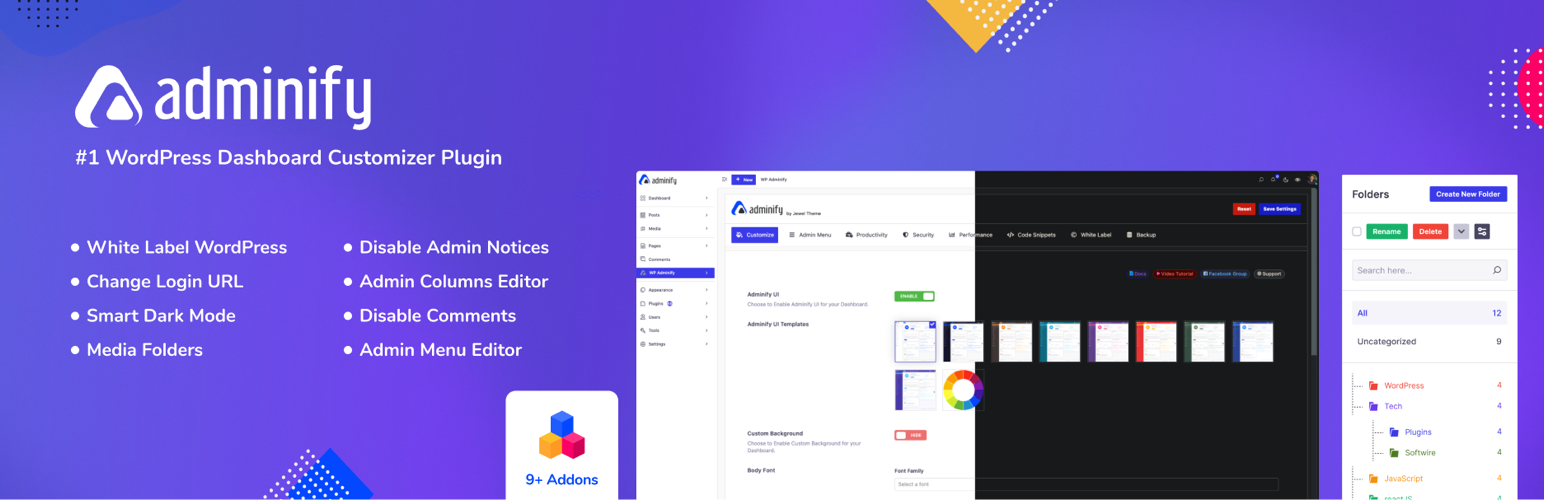
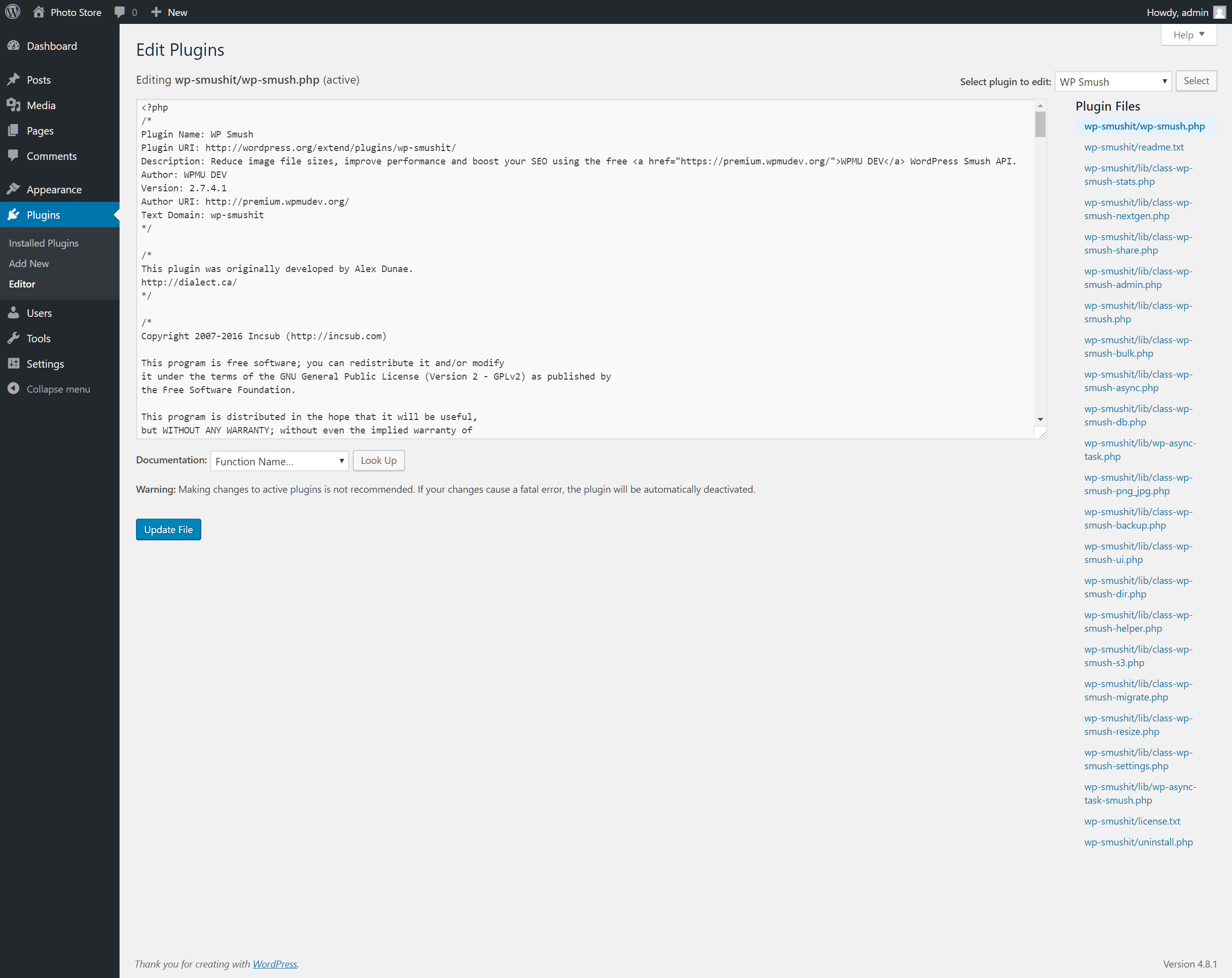
Many people assume WordPress always needs plugins for forms. In reality, you can build forms manually, but it requires writing PHP inside your theme.


🔹 How It Works

When creating forms without plugins, you must:

  • Write HTML in theme templates
  • Handle submissions using PHP
  • Process data via $_POST
  • Send emails using wp_mail()
  • Secure data manually

Example:

<form method="post">
  <input type="text" name="name" required>
  <input type="email" name="email" required>
  <textarea name="message"></textarea>
  <button type="submit">Send</button>
</form>

Processing in functions.php:

if(isset($_POST['name'])) {
  $name = sanitize_text_field($_POST['name']);
  wp_mail("admin@example.com", "New Message", $name);
}

🔹 What You Must Manage Yourself

When you don’t use a plugin, you are responsible for:

❌ Validation
❌ Security (nonces, CSRF-like protection)
❌ Spam filtering
❌ Database storage
❌ Error messages
❌ User feedback

This makes development:

  • More technical
  • Less structured
  • More error-prone

🔹 Architectural Style

WordPress manual forms are:

  • Procedural
  • Template-based
  • Dependent on global variables
  • Not object-oriented

So, WordPress without plugins means:

“Write everything yourself in PHP.”


2️⃣ Creating Forms in WordPress Using Plugins (WPForms and Similar Tools)
Image
Image
Image
Image
Image

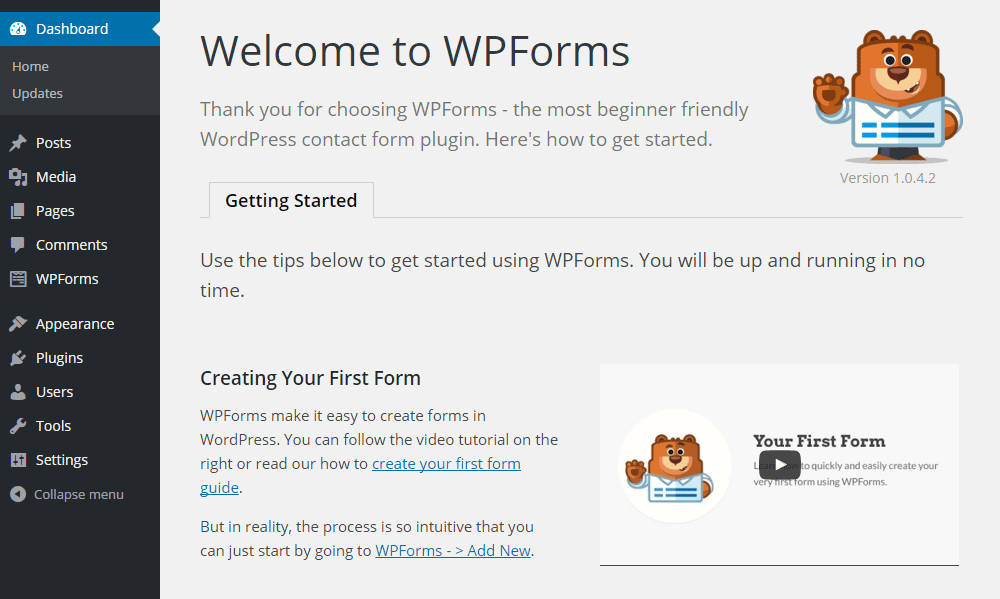
Most WordPress users prefer plugins because they remove technical complexity.

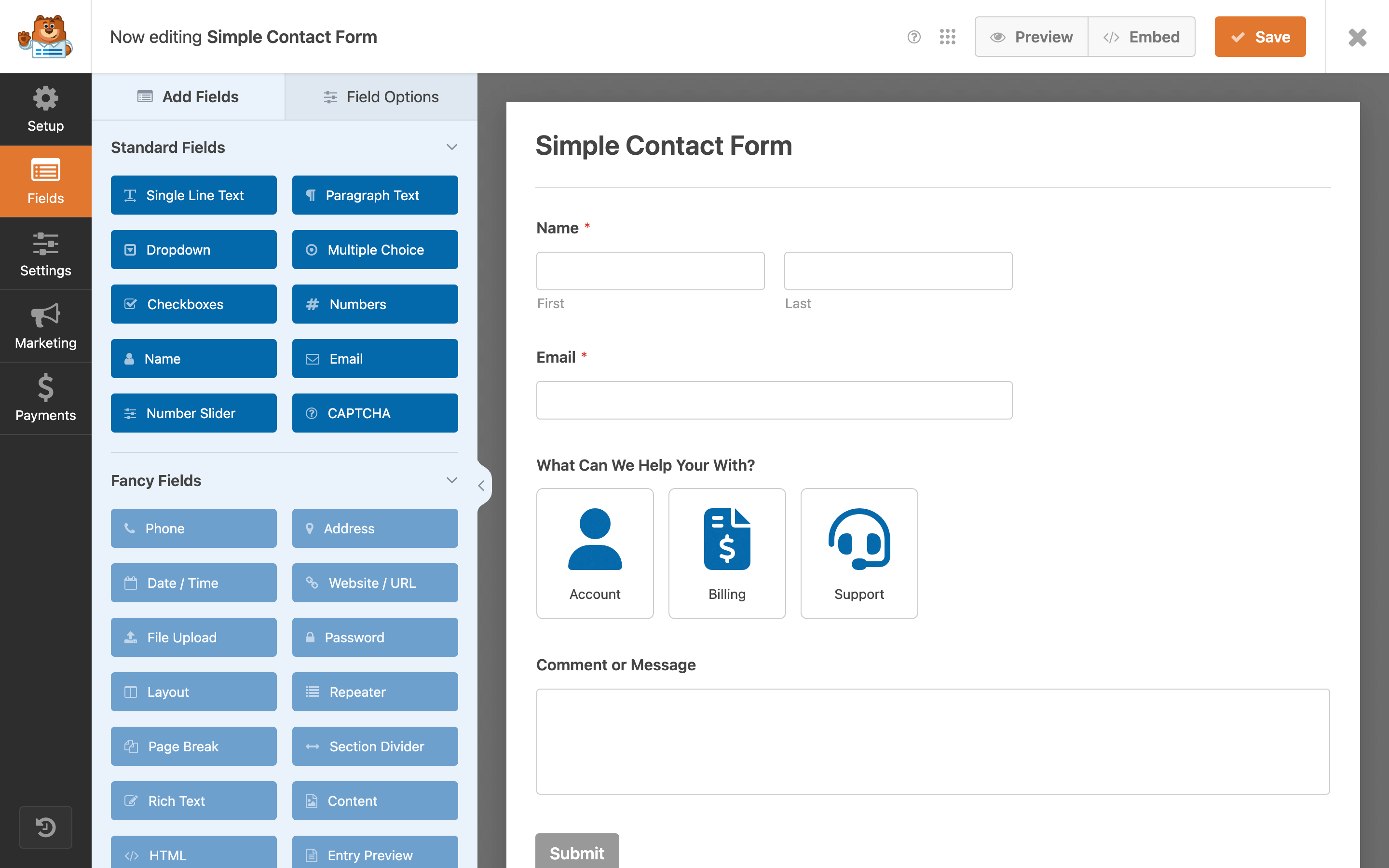
Popular tools like WPForms provide visual form builders.


🔹 How Plugin-Based Forms Work

With WPForms, you simply:

  1. Install the plugin
  2. Open the drag-and-drop editor
  3. Add fields visually
  4. Configure notifications
  5. Embed the form

No coding required.


🔹 Features Provided by Plugins

Plugins automatically handle:

✅ Validation
✅ Security
✅ Spam protection
✅ Database storage
✅ Email alerts
✅ Conditional logic
✅ Payment integration

You only configure settings.


🔹 Ready-Made Templates

WPForms includes templates such as:

  • Contact forms
  • Registration forms
  • Surveys
  • Newsletter forms
  • Feedback forms

You select → customize → publish.


🔹 Development Model

Plugin-based forms are:

  • UI-driven
  • Configuration-based
  • Low-code or no-code

So, WordPress with plugins means:

“Use tools instead of building systems.”


3️⃣ Forms in Django: Framework-Level Integration

Image
Image
Image
Image

Unlike WordPress, Django treats forms as a core feature of the framework.

Forms are not add-ons. They are part of the system.


🔹 How Django Forms Work

Forms are written as Python classes:

from django import forms

class ContactForm(forms.Form):
    name = forms.CharField(max_length=100)
    email = forms.EmailField()

In views:

if form.is_valid():
    data = form.cleaned_data

In templates:

{{ form.as_p }}

🔹 Built-In Capabilities

Django automatically provides:

✅ Field validation
✅ Type checking
✅ Error handling
✅ CSRF protection
✅ Data cleaning
✅ Model integration
✅ Security

No third-party plugin is required.


🔹 Template Form Features

Django templates allow full customization:

{{ form.name.label }}
{{ form.name }}
{{ form.name.errors }}

You control:

  • Layout
  • Styling
  • Error display
  • Accessibility

🔹 Development Model

Django forms are:

  • Object-oriented
  • Structured
  • Scalable
  • Framework-integrated

So, Django means:

“Build robust systems using built-in tools.”


📊 Comparison: WordPress vs Django Forms

FeatureWordPress (No Plugin)WordPress (Plugin)Django
SetupManual codingVisual UIPython classes
ValidationManualPlugin-managedBuilt-in
SecurityManualPlugin-managedBuilt-in
DatabaseManualPlugin-dependentORM-based
FlexibilityMediumLimitedVery High
ScalabilityMediumMediumHigh
Learning CurveHighLowMedium–High

🧠 Philosophical Difference

WordPress Philosophy

Originally built for blogging and content management.

Forms are:

  • Optional features
  • Implemented via plugins
  • Not core architecture

Approach:

“Extend with tools.”


Django Philosophy

Built for application development.

Forms are:

  • Core components
  • Linked to models
  • Linked to validation
  • Linked to security

Approach:

“Engineer the system.”


🔁 Real-World Example: Contact Form

In WordPress (Without Plugin)

You must create:

  1. HTML form
  2. PHP processor
  3. Validation logic
  4. Security system
  5. Email handler

More freedom, more work.


In WordPress (With WPForms)

You do:

  1. Install plugin
  2. Choose template
  3. Publish

Fast, simple, limited.


In Django

You create:

  1. Model (optional)
  2. Form class
  3. View logic
  4. Template

More setup, long-term stability.


🚀 When Should You Use Each?

Choose Manual WordPress Forms If:

✔ You want full control in WordPress
✔ You know PHP well
✔ You need lightweight solutions


Choose WPForms If:

✔ You want fast deployment
✔ You run marketing or content sites
✔ You don’t want to code
✔ You need integrations


Choose Django Forms If:

✔ You’re building SaaS platforms
✔ You need complex validation
✔ You manage large datasets
✔ You want scalable systems


📝 Final Summary

PlatformForm StyleStrength
WordPress (No Plugin)Manual PHPFlexibility
WordPress (Plugin)Visual BuilderSpeed
DjangoFramework-BasedPower & Scalability

👉 WordPress without plugins = Handcrafted
👉 WordPress with plugins = Tool-based
👉 Django = System-based


📌 Conclusion

Forms reflect the philosophy of each platform:

  • WordPress gives you freedom or convenience, depending on plugins.
  • Django gives you structure and engineering depth.

If your goal is fast website deployment, WordPress plugins are ideal.
If your goal is building long-term software products, Django forms offer unmatched control.


🌐 Popular Websites Built with Django — And Where WordPress/PHP Still Shine

Rajeev Bagra · February 6, 2026 · Leave a Comment


When people learn Django, a common question is:

“Is Django really used in big websites, or is it only for small projects?”

The answer is clear: many global platforms started and scaled with Django.

At the same time, WordPress and PHP still dominate blogging and content publishing.

In this article, we’ll explore famous websites built with Django and also highlight where WordPress/PHP has a strong niche.


🔗 Official Websites

Before we begin, here are the official platforms:

  • ✅ Django (Official Website): https://www.djangoproject.com
  • ✅ WordPress (Official Website): https://wordpress.org

These are the best places to learn, download, and follow updates.


📸 Instagram — Social Media at Massive Scale

Instagram chose Django in its early stage because it allowed developers to build features quickly and scale fast.

What Django Powers

  • User accounts
  • Posts, likes, comments
  • Feeds and APIs

📌 Lesson: Django is ideal for user-driven platforms.


🎵 Spotify — Data & Internal Systems

Spotify uses Django mainly for internal dashboards and backend tools.

Django’s Role

  • Analytics systems
  • Admin dashboards
  • Content workflows

📌 Lesson: Django works well for business systems.


📌 Pinterest — Visual Discovery Platform

Pinterest relied heavily on Django while growing from a startup.

Django Supports

  • Boards and profiles
  • Search features
  • Recommendation systems

📌 Lesson: Django handles large content platforms efficiently.


💬 Disqus — Community & Discussions

Disqus manages millions of comments daily using Django.

Django Manages

  • Moderation
  • Spam filtering
  • User reputation

📌 Lesson: Django is strong for community websites.


🦊 Mozilla — Open-Source Platforms

Mozilla uses Django for many of its developer services.

Django Powers

  • Documentation portals
  • Community platforms
  • Account systems

📌 Lesson: Django fits technical ecosystems.


⚖️ Django vs WordPress/PHP: Where Each Has a Niche

Now let’s look at where each platform shines.


🐍 Where Django Is Strongest

Django is best for:

✅ Custom web apps
✅ SaaS platforms
✅ AI & data systems
✅ APIs & mobile backends
✅ Enterprise software

📌 Django is built for developers creating systems, not just websites.


🐘 Where WordPress/PHP Dominates

WordPress remains the top choice for:

✅ Blogging & Content Sites

  • Personal blogs
  • News portals
  • Affiliate sites

✅ Business Websites

  • Company pages
  • Portfolios
  • Service sites

✅ E-commerce

  • Online stores (WooCommerce)
  • Digital products

✅ Non-Technical Users

  • Visual editors
  • Easy publishing
  • Plugin ecosystem

📌 WordPress is built for publishers and creators.


📊 Quick Comparison

FeatureDjango (Python)WordPress/PHP
Official Sitedjangoproject.comwordpress.org
SetupMediumVery Easy
CodingRequiredMinimal
BloggingWeakExcellent
Custom AppsExcellentLimited
CostHigherLower
ScalabilityHighModerate

🎯 Which Should You Choose?

Choose Django If You Want:

✅ Build web applications
✅ Create SaaS products
✅ Work with APIs and data
✅ Become a backend developer

👉 Start here: https://www.djangoproject.com


Choose WordPress If You Want:

✅ Run a blog
✅ Build affiliate sites
✅ Launch quickly
✅ Avoid heavy coding

👉 Start here: https://wordpress.org


🚀 Best Practice: Use Both Together

Many creators use:

  • WordPress → Content & SEO
  • Django → Tools & Applications

Connected via APIs, this gives:

✔ Traffic
✔ Automation
✔ Monetization
✔ Scalability


📝 Final Thoughts

Platforms like Instagram, Pinterest, and Spotify prove that:

Django is enterprise-ready and scalable.

Meanwhile, WordPress proves that:

Content publishing doesn’t need complexity.

So it’s not:

❌ Django vs WordPress
✅ It’s: “What am I building?”

  • Apps → Django
  • Blogs → WordPress
  • Hybrid → Both

WordPress vs Django: The Complete Guide to Launching, Scaling, and Hosting Your Website (With Checklist + Real Examples)

Rajeev Bagra · January 21, 2026 · Leave a Comment

Launching a website sounds simple—until you actually do it.

You choose a domain, pick a hosting provider, set up the site, and then you hit the real question:

✅ Should you launch on WordPress?
or
✅ Should you build it using Django?

Both are powerful, widely used, and trusted technologies. But they are built for different goals.

In this complete guide, you’ll learn:

  • The real difference between WordPress vs Django
  • Which one is better for speed, SEO, customization, and security
  • A 10-question decision checklist
  • Real-world examples of “the same website” built in both
  • Signs you may need to upgrade from WordPress to Django
  • The best hosting setup for each (including AWS Lightsail)

Let’s dive in.


1) What WordPress and Django Actually Are

✅ WordPress (CMS)

WordPress is a Content Management System (CMS) designed mainly for:

  • Blogs and content sites
  • Business websites
  • Affiliate marketing sites
  • AdSense websites
  • News portals
  • Portfolio websites

The best thing about WordPress is that it gives you a full website structure instantly—without coding.

You manage content from an admin dashboard.


✅ Django (Python Web Framework)

Django is a Python framework used to build websites and web applications using code.

It’s ideal when you want:

  • Custom web applications (SaaS)
  • Dashboards and portals
  • Membership systems with custom logic
  • Automated workflows
  • APIs for mobile apps + web apps

In short:

✅ WordPress is built to publish content easily
✅ Django is built to build systems and products


2) Launch Speed: Which One Goes Live Faster?

ߚ WordPress = Fastest Launch

A WordPress website can go live in:

✅ 30 minutes to a few hours

Typical process:

  1. Buy domain + hosting
  2. Install WordPress (often 1-click)
  3. Choose a theme
  4. Add plugins
  5. Publish pages and blog posts

If your priority is speed, WordPress wins.


ߧ Django = Slower Launch, More Control

A Django website typically takes:

✅ days to weeks

Because you build everything step-by-step:

  • Models (database structure)
  • Views and URLs
  • Templates/design logic
  • Admin features
  • Deployment setup (Gunicorn + Nginx)

Django is slower initially, but it’s extremely powerful long-term.


3) Ease of Use: Who Can Manage It?

✅ WordPress (Beginner-Friendly)

WordPress is perfect if:

  • you want to edit pages easily
  • you want drag-and-drop tools (Elementor, Gutenberg)
  • you want clients to manage the site without developer help

✅ Django (Developer-Friendly)

Django is best if:

  • you’re comfortable with Python
  • you want full control over features
  • you want custom workflows and dashboards

Django has an admin panel too, but it’s not the same “ready CMS” experience as WordPress unless customized.


4) Customization and Flexibility

✅ WordPress: Plugins + Themes

WordPress customization = install and configure.

Pros:

  • quick results
  • thousands of plugins
  • huge theme market

Cons:

  • too many plugins = slow, conflict-prone, security risk
  • advanced customization becomes messy

✅ Django: Unlimited Custom Development

Django is unlimited because you’re coding it.

You can build:

  • custom roles and permissions
  • custom dashboards
  • custom database systems
  • APIs, automation, and unique business rules

But the trade-off is time and development work.


5) Security Comparison

✅ WordPress Security (Strong but needs maintenance)

WordPress is secure if you follow best practices, but it’s a common target because it’s so popular.

Security issues mostly come from:

  • outdated plugins
  • weak passwords
  • pirated themes/plugins

✅ Django Security (Strong by design)

Django includes protections such as:

  • CSRF protection
  • secure authentication handling
  • security middleware options

Django is generally safer when built and maintained properly, because it avoids plugin chaos.


6) SEO + Blogging: Who Wins?

✅ WordPress = Best for SEO & Blogging

WordPress is the best choice if your growth plan is:

✅ content publishing
✅ affiliate marketing
✅ AdSense monetization
✅ organic traffic from Google

SEO tools like RankMath and Yoast make WordPress extremely easy for beginners.


✅ Django SEO is Possible (But Manual)

Django sites can rank just as well—but you must build:

  • a blogging system
  • meta tags handling
  • structured data
  • sitemaps and URL structures

It’s doable, but not plug-and-play.


✅ WordPress vs Django Decision Checklist (10 Questions)

Use these 10 questions to pick your best option.

  1. Do I need the website live quickly (today/this week)?
    ✅ WordPress
  2. Is blogging + SEO my primary goal?
    ✅ WordPress
  3. Do I want non-technical people to update content easily?
    ✅ WordPress
  4. Do I need advanced user roles and permissions?
    ✅ Django
  5. Do I need dashboards and custom reports?
    ✅ Django
  6. Am I building an actual app, not just web pages?
    ✅ Django
  7. Am I relying on too many plugins for basic functions?
    ✅ WordPress (short-term) but consider Django long-term
  8. Do I want a clean, scalable backend structure?
    ✅ Django
  9. Do I have coding skills (or a developer)?
    ✅ Django becomes easier
  10. Do I want to build a long-term platform or SaaS?
    ✅ Django

✅ Real Examples: “Same Website” Built in WordPress vs Django

Let’s compare real-world scenarios.


Example 1: Local Business Website

✅ WordPress Version

Includes:

  • homepage
  • services pages
  • contact form
  • blog
  • map

✅ Launch time: 1 day
✅ Best choice: WordPress

✅ Django Version

Same website needs:

  • custom page templates
  • custom forms
  • admin configuration

✅ Launch time: 1–2 weeks
✅ Best only if you want custom workflows


Example 2: Affiliate Website / AdSense Website

✅ WordPress Version

You can launch with:

  • SEO plugin
  • affiliate link tools
  • fast publishing system

✅ Best choice: WordPress

✅ Django Version

You must build:

  • blog editor system
  • SEO + sitemaps
  • link management tools

✅ Best choice only if you want to build a product out of it


Example 3: Membership Portal / Student Dashboard

✅ WordPress Version (Plugin-Based)

Can be done using:

  • membership plugins
  • LMS plugins
  • payment plugins

✅ good for quick launch
❌ plugins can become heavy long-term

✅ Django Version (Custom Platform)

Django can build:

  • custom login dashboard
  • course system
  • progress tracking
  • role-based access

✅ Best choice: Django


Example 4: Job Board Website

✅ WordPress Version

  • job board plugin
  • paid listing setup
  • fast launch

✅ Best for speed

✅ Django Version

  • custom job model
  • employer workflows
  • moderation system
  • powerful search filters

✅ Best for long-term platform building


✅ When WordPress Becomes Limiting: Signs You Should Switch to Django

WordPress is amazing—but not always forever.

Here are the clearest signs you’re outgrowing WordPress.


1) You’re Using Too Many Plugins

When you need 20–40 plugins just to keep the site running smoothly, problems start:

  • plugin conflicts
  • slow performance
  • security vulnerabilities
  • expensive renewals

✅ Django replaces multiple plugins with clean custom code.


2) You Need Custom User Roles Beyond Basic WordPress

If your platform needs roles like:

  • student / teacher / admin
  • buyer / seller / moderator
  • verified / unverified members

WordPress becomes complicated quickly.

✅ Django handles roles and permissions naturally.


3) You Need Workflows (Submit → Review → Approve)

If your website needs business logic like:

  • approvals
  • verification
  • step-based processes

WordPress feels “forced” and plugin-dependent.

✅ Django is built for workflow-based systems.


4) You Want Proper Dashboards (Not Just WP Admin)

WordPress admin works great for posts and pages.

But if you want:

  • analytics dashboards
  • revenue tracking
  • reports and graphs
  • activity logs

✅ Django is the better foundation.


5) You Want APIs + App Integrations

If your future includes:

  • mobile apps
  • custom integrations
  • API endpoints

✅ Django is the correct choice.


✅ Best Hosting Setup for WordPress vs Django (Including AWS Lightsail)

Hosting is where “good websites” become “serious websites.”

Let’s break down the best setups for each.


✅ Best Hosting Setup for WordPress

Option 1: AWS Lightsail WordPress (Bitnami)

Perfect for:
✅ affiliate sites
✅ AdSense blogs
✅ niche content websites
✅ business websites

Why it works:

  • 1-click WordPress install
  • low cost
  • strong control
  • scalable upgrades

Recommended plans:

  • $5/month for starter
  • $10–$20/month for higher traffic

Option 2: Managed WordPress Hosting (WP Engine)

Perfect for:
✅ business websites
✅ agencies
✅ premium clients

Best for people who want:

  • performance optimization
  • less server stress
  • strong support

✅ Best Hosting Setup for Django

Best Setup: AWS Lightsail Ubuntu + Nginx + Gunicorn

Django hosting is more technical but very professional.

Typical production flow:

User → Nginx → Gunicorn → Django App → Database

Best for:
✅ SaaS products
✅ dashboards and portals
✅ membership platforms
✅ APIs

Recommended plans:

  • start with $5–$10/month
  • scale as users increase

✅ The Best Hybrid Strategy (Most Practical)

This is the smartest approach many founders use:

✅ WordPress = Marketing + Blog + SEO Engine
✅ Django = Product/App + Dashboard + Custom Platform

Example:

  • WordPress pages rank on Google
  • Django powers login users and paid features

That combination gives you:
✅ fast traffic growth
✅ strong custom product foundation


Final Conclusion

If your goal is:

✅ Fast launch + content + SEO + monetization → WordPress
✅ Custom platform + long-term scalability + advanced features → Django

WordPress is the best website launcher.
Django is the best platform builder.


Primary Sidebar

Recent Posts

  • Developing Forms in WordPress vs Django: From Manual Coding to Plugins and Framework-Level Control
  • 🌐 Popular Websites Built with Django — And Where WordPress/PHP Still Shine
  • Is Operating Django Similar to Using DOS? Understanding Projects, Apps, and URLs
  • 🚀 How a WordPress (PHP) Website Can Run Python Code in the Browser
  • Migrating WordPress from AWS Lightsail to EC2: A Practical, Step-by-Step Perspective

Archives

  • February 2026
  • January 2026
  • December 2025
  • October 2025
  • August 2025

Categories

  • Blog

Tag

AWS EC2 AWS Lightsail Contabo CSS DBMS DigitalOcean Django Git Github HTML Python spreadsheets SQL webdev webhosting WordPress
Terms Display
WordPress CSS DBMS Django Git AWS Lightsail DigitalOcean webdev HTML Contabo webhosting spreadsheets SQL AWS EC2 Python Github

Start building your digital presence with Webnzee. Contact Us

Webnzee

This website may use AI tools to assist in content creation. All articles are reviewed, edited, and fact-checked by our team before publishing. We may receive compensation for featuring sponsored products and services or when you click on links on this website. This compensation may influence the placement, presentation, and ranking of products. However, we do not cover all companies or every available product.

  • Home
  • Blog
  • Terms
  • Support
  • Subscribe
  • Contact
Scroll Up