
In today’s digital economy, game development and artificial intelligence (AI) are two of the fastest-growing technology domains. While they often overlap, they require different expertise, hardware investments, and product-development strategies.
This article explains:
- How expertise in game development and AI is similar and different
- What hardware each field needs
- How users, developers, and founders build products
- Where to learn and how to get cloud and hardware credits
Understanding Expertise: Game Development vs AI
Similarities
Both fields rely on strong foundations in:
- Programming (C++, C#, Python, JavaScript)
- Algorithms and problem-solving
- Software engineering practices
- Version control and collaboration
- Iterative testing and optimization
Whether you are building a game or training a model, success depends on logical thinking, experimentation, and continuous improvement.
Differences
| Area | Game Development | Artificial Intelligence |
|---|---|---|
| Core Focus | Interactivity, graphics, storytelling, performance | Data, learning algorithms, prediction, automation |
| Main Skills | Game engines, physics, UI/UX, rendering | Statistics, ML models, neural networks |
| Nature of Work | Creative + technical | Analytical + research-driven |
| Output | Playable experience | Intelligent system |
Game developers primarily focus on user experience and immersion, while AI developers focus on data and decision-making systems.
Skills and Tools in Game Development


Modern game developers typically work with:
- Game engines
- 2D/3D graphics and animation tools
- Physics simulation systems
- Audio and UI frameworks
- Performance profiling and debugging tools
Popular platforms include:
- Unity (by Unity Technologies)
- Unreal Engine (by Epic Games)
A game developer often combines the roles of programmer, designer, and artist, especially in indie projects.
Key Skills in Game Development
- C# or C++ programming
- Level and environment design
- Real-time rendering optimization
- Multiplayer networking basics
- Player experience design
Skills and Tools in Artificial Intelligence
AI developers usually specialize in:
- Data processing and cleaning
- Machine learning and deep learning
- Model training and evaluation
- Cloud-based deployment
- Automation and optimization
Common frameworks and platforms include:
- TensorFlow
- PyTorch
- Scikit-learn, Keras, and NumPy
Key Skills in AI Development
- Linear algebra and statistics
- Python programming
- Neural network architectures
- Model tuning and validation
- Responsible AI practices
AI developers focus more on mathematical reasoning and experimentation than on visual design.
Hardware Requirements: Game Dev vs AI
Hardware for Game Development
Game development needs balanced performance:
- CPU: Multi-core processors (Intel i7/Ryzen 7 or better)
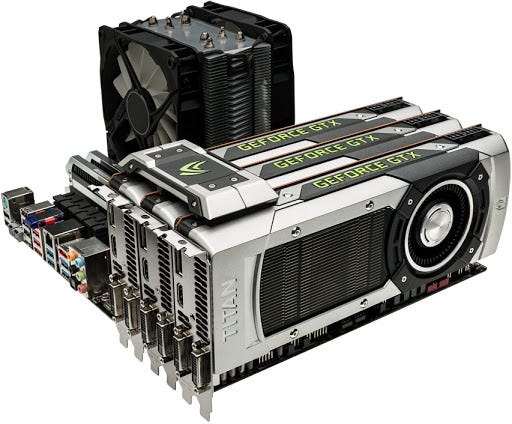
- GPU: Dedicated graphics card (RTX series or equivalent)
- RAM: 16–32 GB (64 GB for large projects)
- Storage: NVMe SSD
This setup ensures smooth rendering, fast compilation, and efficient asset handling.
Hardware for AI Development
AI workloads are more resource-intensive:
- CPU: Multi-core, mainly for preprocessing
- GPU/TPU: High-performance GPUs with large VRAM
- RAM: 32–64 GB or more
- Storage: Large SSDs for datasets
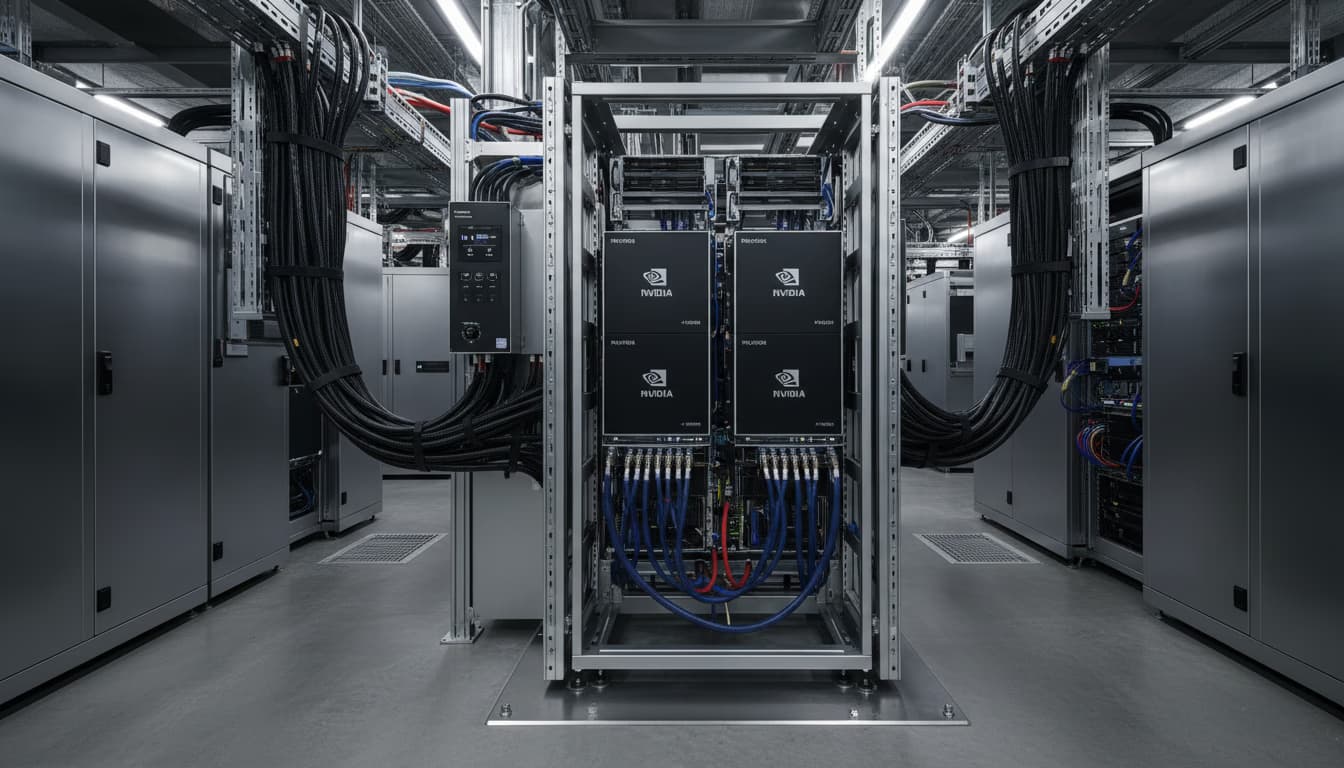
Training deep learning models often requires cloud GPUs, as local systems may not be sufficient.
Comparison Summary
| Feature | Game Development | AI Development |
|---|---|---|
| GPU Usage | Real-time graphics | Model training |
| RAM Needs | Moderate–High | High–Very High |
| Cloud Dependency | Optional | Often essential |
| Local Work | Common | Limited for big models |
How Products Are Built: Users, Developers, and Founders
Role of End Users
End users (players or customers):
- Test early versions
- Provide feedback
- Report bugs and usability issues
- Shape future updates
User feedback is critical in both gaming and AI products.
Role of Developers
Game Developers:
- Build game mechanics
- Design levels
- Integrate graphics and sound
- Optimize performance
AI Developers:
- Prepare datasets
- Train models
- Evaluate accuracy
- Deploy APIs and services
In modern projects, developers often collaborate across both domains.
Role of Startup Founders
Founders manage strategy and execution:
- Idea & Research – Identify problems and market needs
- MVP Development – Build a prototype using engines or ML models
- Testing & Feedback – Validate with real users
- Cloud Scaling – Host backends and AI inference
- Launch & Growth – Marketing, updates, monetization
Successful founders balance technology, business, and user experience.
Learning Resources for Game Development and AI
Game Development
- Unity Learn – https://learn.unity.com
- Unreal Online Learning – https://www.unrealengine.com/onlinelearning
- Udemy Game Dev Courses – https://www.udemy.com/topic/game-development
- GDC Vault – https://www.gdcvault.com
Artificial Intelligence
- Coursera AI Courses – https://www.coursera.org
- Fast.ai – https://www.fast.ai
- Google AI Learning – https://cloud.google.com/learn/ai-ml
- MIT OpenCourseWare – https://ocw.mit.edu
Combined Learning (AI + Games)
- AI in Game Development – https://www.coursera.org/articles/ai-for-game-development
- Open-source projects on GitHub
Getting Cloud Credits and Hardware Support
Startup Cloud Credit Programs
Many companies support early-stage founders:
- Google for Startups
https://cloud.google.com/startup - Microsoft for Startups (Azure)
https://startups.microsoft.com - Amazon AWS Activate
https://aws.amazon.com/activate - NVIDIA Inception Program
https://www.nvidia.com/en-in/startups - DigitalOcean Startups
https://www.digitalocean.com/startups
These programs can provide thousands of dollars in free cloud credits.
Hardware Acquisition Options
- Build custom PCs with GPUs and high RAM
- Buy refurbished workstations
- Use cloud GPU rentals
- Apply for student/free-tier programs
Cloud platforms often provide $100–$300 free credits for beginners.
Future Trends: Where Gaming and AI Meet
The future increasingly blends both fields:
- AI-powered NPCs
- Procedural world generation
- Personalized gameplay
- Automated testing
- Smart analytics
As AI improves, games become more adaptive and immersive, while AI applications benefit from game-like interfaces.
Final Thoughts
Game development and AI are both powerful career and business paths, but they require different mindsets:
- Game Development focuses on creativity, interaction, and immersion
- Artificial Intelligence focuses on data, learning, and automation
Both demand strong technical foundations, modern hardware, and continuous learning.
For developers and founders, combining these skills—supported by cloud credits and global learning platforms—offers enormous opportunities in the digital economy.
Reddit – Trending Discussions on Artificial Intelligence & Gaming
- submitted by /u/Relevant_Reality7465 [link] [comments]
- submitted by /u/Tiny-Examination5627 [link] [comments]
- Autonomous attacks powered by AI agents are becoming more common, Jessica Ji, a senior research analyst at Georgetown’s Center for Security and Emerging Technology (CSET), told Fortune. This is primarily happening because the tools have “gotten meaningfully better” over the past year or so, she said. Specifically, AI companies have improved their models’ coding skills, […]
- AI agents can complete a phone workflow successfully and still leave one awkward question unanswered: what actually happened? I built an open-source Python sample that treats the audit trail as part of the workflow’s API instead of reconstructing it later from application logs. The sample uses Telnyx Missions to: – Create a durable objective – […]
- llama.cpp merged PR #29887 two weeks ago and I think it is the most interesting thing to land in local inference this year, so I went through the PR, the benchmarks and the review thread and wrote up how it actually works. Short version below, long version linked at the end. The problem Qwen3.8-Flash-Next at […]
- For some reason, I've always been fascinated by the human stories behind our beloved games, the developers and the "where he is now". Many people who bled and sweated for our hobby are no longer in the business. This trio is the perfect example, I've known this for years now (probably you do as well) […]
- Bye Sandal! submitted by /u/AUTOMATA88 [link] [comments]
- submitted by /u/LordLoko [link] [comments]
- Bullfrog (Syndicate, Dungeon Keeper, Populous, Theme Series) – Purchased by EA in 1995; shut down in 2001. Westwood (Command & Conquer) – Purchased by EA in 1998; shut down in 2003. Origin (Ultima, Wing Commander) – Purchased by EA in 1992; shut down in 2004. NuFX (NBA Street) – Purchased by EA in 2004; shut […]
- I love the story telling and arcade feel of this game. Also runs well on handhelds. submitted by /u/Pterodactyl_midnight [link] [comments]
Discover more from Webnzee
Subscribe to get the latest posts sent to your email.

Leave a Reply