• Skip to primary navigation
  • Skip to main content
  • Skip to primary sidebar
webnzee

Webnzee

Webnzee — Your Web Dev Companion.

  • Home
  • Blog
  • Trending
  • Terms
    • Privacy
    • Disclaimer
  • Subscribe
  • Contact
  • Show Search
Hide Search

Post

Can a WordPress-Like Web App Run on a Spreadsheet Instead of a Database?

Rajeev Bagra · December 21, 2025 · Leave a Comment

Image

At first glance, a spreadsheet feels like a simple database. It has rows, columns, and structured data. So a natural question arises:

Why can’t a web app like WordPress use a spreadsheet instead of a DBMS?
Is it impossible—or just a design choice?

Image

The short answer: it is technically possible, but practically unworkable once real users and real traffic arrive. Let’s unpack this in a clear, non-theoretical way.


The Temptation: Why Spreadsheets Seem Like a Good Idea

Spreadsheets already offer:

  • Structured rows and columns
  • Easy editing and visualization
  • Familiarity for non-technical users
  • Cloud versions with sharing (Google Sheets)

For a beginner or solo creator, it feels reasonable to ask:

“Why not store posts, users, and comments in sheets?”

In fact, some prototypes and internal tools do exactly this. But the moment you aim for a WordPress-scale CMS, the cracks appear.


1. Concurrency: Web Apps Are Multi-User by Nature

A typical WordPress site may have:

  • Hundreds of visitors reading simultaneously
  • Multiple authors editing posts
  • Plugins logging data
  • Background tasks running every minute

Databases are built for this reality.

What goes wrong with spreadsheets?

  • File locking conflicts
  • Overwrites during simultaneous edits
  • Delays or corrupted data

Spreadsheets assume a few humans working slowly.
Web apps assume machines hitting data thousands of times per second.


2. Relationships: WordPress Is Not “Just Posts”

Behind the scenes, WordPress manages:

  • Posts
  • Users
  • Comments
  • Categories & tags
  • Metadata
  • Plugin-specific data

These are relational structures.

Databases enforce relationships using:

  • Foreign keys
  • Constraints
  • Indexed joins

Spreadsheets can simulate relationships using IDs—but:

  • Nothing enforces correctness
  • Deletions don’t cascade
  • Errors accumulate silently

What’s manageable at 100 rows becomes chaos at 100,000.


3. Performance: Searching and Filtering at Scale

Common WordPress actions:

  • “Latest posts in category X”
  • “Search content by keyword”
  • “Posts by author with tag Y”

Databases:

  • Use indexes
  • Optimize queries
  • Fetch only what’s needed

Spreadsheets:

  • Scan rows sequentially
  • Slow down dramatically as size grows
  • Are not optimized for text search or joins

A spreadsheet may feel fine today—but performance collapses tomorrow.


4. Data Integrity: Partial Saves Are Dangerous

When you publish a WordPress post:

  • Content is saved
  • Metadata is saved
  • Taxonomies are updated
  • Cache is refreshed

Databases use transactions to ensure:

Either everything succeeds—or nothing does.

Spreadsheets have no true rollback mechanism.
A failure halfway through leaves data inconsistent.

For a CMS, that’s unacceptable.


5. Security: File-Based Storage Is a Risk

Databases provide:

  • User roles and permissions
  • Isolated access
  • Protection against injection attacks

Spreadsheets are:

  • Often stored as files
  • Hard to secure at row-level
  • Easy to leak or duplicate

One exposed spreadsheet can mean total data compromise.


6. Scalability: Growth Is Where Spreadsheets Collapse

WordPress can scale by:

  • Caching
  • Replication
  • Optimized queries
  • Load balancing

Spreadsheets:

  • Are single-document systems
  • Don’t shard or replicate well
  • Become bottlenecks very quickly

A CMS must assume growth—even if traffic is small today.


When Do Spreadsheets Make Sense?

Spreadsheets are still useful in limited contexts:

✅ Internal dashboards
✅ Low-traffic tools
✅ Prototypes and MVPs
✅ Read-heavy, write-light apps
✅ Single-user workflows

But not for a public, multi-user CMS.


Why WordPress (and Similar Web Apps) Use DBMS by Design

WordPress was built for:

  • Collaboration
  • Plugins and extensibility
  • Long-term content storage
  • Millions of reads and writes

Databases are:

  • Predictable
  • Transaction-safe
  • Designed for automation
  • Built for the web

Spreadsheets are:

  • Human-centric tools
  • Visual and manual
  • Not web-scale systems

Final Verdict

You can build a WordPress-like app on a spreadsheet—
but only until real usage begins.

Spreadsheets fail at:

  • Concurrency
  • Data integrity
  • Performance
  • Security
  • Scalability

That’s why serious web applications inevitably rely on DBMS + SQL, even if they start life as CSV files or Google Sheets during experimentation.


Future of Custom Themes, Template Designers, and Paid Plugins in the Age of AI

Rajeev Bagra · December 15, 2025 · Leave a Comment

Future of custom themes and template designers and paid themes/plugins in this category
byu/DigitalSplendid inHTML

Creating a fully functional homepage in under 15 minutes, without writing a single line of HTML or CSS, naturally raises a powerful question:

Image

Is there still any real value in learning or doing front-end coding from scratch when AI can do the job instantly?

This question is no longer theoretical. It reflects a real shift in how websites are being designed, built, and delivered.


🚀 The AI Acceleration Moment

Image

What once required:

  • layout planning
  • CSS fine-tuning
  • responsive testing

can now be achieved through simple natural-language prompts.

Modern AI tools can:

  • generate layouts
  • adjust typography and spacing
  • suggest color palettes
  • output deploy-ready markup

For static or marketing-focused pages, the productivity leap is undeniable.

Just as page builders once disrupted hand-coded themes, prompt-driven design is now disrupting page builders themselves.

Image

💎 Scarcity Creates Value — Until It Doesn’t

Traditionally, technical skills had value because they were scarce:

  • Knowing HTML/CSS → valuable
  • Knowing WordPress → valuable
  • Knowing page builders → valuable

But once AI can:

  • generate layouts instantly
  • fix styling issues
  • adapt designs on demand

the scarcity disappears, and so does the premium attached to routine work.

This doesn’t mean skills lose meaning—but they lose exclusivity.


🕰️ A Familiar Pattern: The Transcription Boom and Bust

This disruption isn’t new.

Around the mid-2000s:

  • Transcription outsourcing created massive employment
  • Companies earned by training accents, typing speed, and formatting
  • Entire businesses ran 24×7 on human effort

Then speech recognition matured.

Within a few years:

  • Most transcription jobs vanished
  • Only highly trained editors survived to provide final review

The pattern is strikingly similar today.

Automation rarely removes everything.
It removes most roles and amplifies a few.


🧠 Clients Care About Results, Not the Process

An uncomfortable truth for professionals:

Most clients do not care whether:

  • code was handwritten
  • layouts were crafted pixel by pixel
  • AI generated the output

They care about:

  • speed
  • cost
  • reliability
  • outcomes

Understanding how something is produced matters more to builders than to buyers.


⚠️ Where AI Still Struggles

A thoughtful counterpoint often raised is that good HTML is not always visible.

And that’s correct.

Areas where human expertise still matters:

♿ Accessibility

  • semantic HTML
  • ARIA roles
  • screen reader compatibility

AI often misses subtle accessibility requirements.

🔐 Security

  • authentication flows
  • input validation
  • vulnerability prevention

AI can unknowingly introduce risks.

🧩 Complex Interactivity

  • logins and sessions
  • search systems
  • user state management

For a simple homepage, AI is excellent.
For complex, interactive systems, blind trust can be costly.


🧠 Is Learning HTML/CSS Still Worth It?

Yes—but for different reasons than before.

Learning code today is less about:

  • writing everything manually
  • competing on speed

and more about:

  • understanding what AI generates
  • validating quality
  • fixing edge cases
  • making informed architectural decisions

Coding knowledge is becoming editorial and supervisory, not mechanical.

Much like transcription editors survived automation, developers who understand fundamentals deeply will remain relevant.


🔮 The Future of Themes, Templates, and Plugins

Likely to Decline

  • generic themes
  • one-size-fits-all templates
  • simple layout-only plugins

Likely to Survive

  • niche and compliance-focused themes
  • accessibility-first frameworks
  • performance-optimized plugins
  • security-critical tooling

Likely to Evolve

  • theme designers → design system curators
  • developers → AI supervisors and integrators
  • plugins → logic, trust, and control layers, not just UI

✨ Final Thought

AI doesn’t eliminate value—it redefines it.

The future belongs to those who:

  • understand fundamentals
  • use AI deliberately
  • add judgment, responsibility, and context

Building a homepage in minutes is impressive.
Building a secure, accessible, scalable product still requires human insight.

The winning professional won’t be the one who types the most code—
but the one who knows which code truly matters.

There Is No Sharp Line Between Hardware, Software, and the Cloud — It’s All One Continuum

Splendid · December 14, 2025 · Leave a Comment

Image
Image
Image
Image
Image

In everyday discussions, we often draw hard boundaries between concepts like hardware vs software, desktop applications vs web applications, or local PCs vs cloud platforms like AWS. But in reality, these boundaries are more conceptual conveniences than technical truths.

At a deeper level, the same information technology principles power everything—from Microsoft Office running on your personal computer to a website served from a global cloud infrastructure.

Let’s unpack this idea.


1. Hardware and Software: Two Sides of the Same Coin

We are taught early on:

  • Hardware → physical components (CPU, RAM, storage)
  • Software → programs and instructions

This distinction is useful for learning—but not absolute.

Why the line is blurry:

  • Software only exists because hardware executes it
  • Hardware is useless without software telling it what to do
  • Firmware (BIOS, microcode) sits directly in between

At the lowest level:

  • Software becomes binary instructions
  • Hardware becomes logic gates reacting to electrical signals

👉 From this perspective, software is abstracted hardware, and hardware is concretized software.


2. MS Office vs Web Applications: Same Logic, Different Delivery

There is no thin line of difference between web development and how we access MS Office or similar office documentation software.

That observation is fundamentally correct.

Consider this comparison:

MS Office (Local)Google Docs / Web Apps
Runs on local CPURuns on remote CPU
Uses local RAMUses cloud RAM
Stores files locallyStores files remotely
UI rendered locallyUI rendered locally

What’s common?

  • The browser itself is software
  • Rendering happens on your device
  • User interaction logic is identical

The difference is where computation and storage happen, not how computing works.


3. Your PC vs AWS: Scale, Not Substance

A powerful insight is this:

It is the same IT technology that works on a small PC and on AWS.

Yes—AWS is not magic. It is:

  • CPUs
  • RAM
  • Storage
  • Networking
  • Operating systems
  • Virtualization layers

The only difference is scale and abstraction.

Think of AWS as:

  • A massive distributed computer
  • Your PC is a small standalone computer
  • Both execute instructions
  • Both process data
  • Both obey the same laws of computation

Cloud computing doesn’t replace local computing—it extends it.


4. The Browser: The Great Equalizer

Modern browsers have quietly erased many traditional distinctions.

A browser today can:

  • Run full applications
  • Edit documents
  • Compile code
  • Stream video
  • Host development environments

In effect:

The browser has become a universal operating system interface.

Whether the backend lives:

  • On your laptop
  • On a server in your city
  • On AWS across continents

…the user experience often feels the same.


5. Abstraction Layers: The Real Story of IT Evolution

The real evolution in computing is not replacement, but abstraction.

Each layer builds on the previous one:

  1. Transistors
  2. Logic gates
  3. Machine code
  4. Operating systems
  5. Applications
  6. Web applications
  7. Cloud platforms

None of these eliminate the earlier layers—they depend on them.

That’s why:

  • Web apps still need CPUs
  • Cloud still runs on physical servers
  • Software always ends as hardware instructions

6. Why This Perspective Matters

Understanding this continuum helps you:

  • Learn technologies faster
  • See through hype cycles
  • Make better architectural decisions
  • Avoid false dichotomies (local vs cloud, hardware vs software)

It also explains why skills transfer:

  • A developer who understands systems adapts easily
  • Concepts like memory, processes, and I/O never disappear
  • Only interfaces and abstractions change

Final Thought: One Technology, Many Faces

There isn’t a rigid line between:

  • Hardware and software
  • Desktop apps and web apps
  • Local machines and cloud platforms

There is only one computing reality, expressed at different levels of abstraction.

From a small PC on your desk to a globally distributed cloud service, the same foundational principles apply—only the scale, reach, and abstraction differ.

And recognizing this unity is a sign of truly understanding how modern computing works.

Why Most Websites Use PHP (WordPress) While Python Dominates Modern Education

Rajeev Bagra · October 18, 2025 · Leave a Comment


It might seem strange at first glance — the majority of websites today are built with WordPress, which runs on PHP, yet when you look at college curriculums or online learning platforms like Udacity, Coursera, or edX, they rarely teach PHP. Instead, they focus on Python or JavaScript.


Let’s explore why this paradox exists and what it reveals about the evolution of web technology.


🧩 1. WordPress’s Dominance Comes from History, Not Current Trends

WordPress powers over 40% of all websites worldwide. Its success began in the early 2000s, when PHP offered the easiest and most affordable way to build dynamic web pages.

Back then:

  • PHP was free and worked seamlessly with cheap shared hosting.
  • WordPress made website creation accessible to everyone with themes and plugins.

So, while PHP remains widespread, its dominance is largely historical, not due to modern innovation. It’s like COBOL in banking — deeply embedded, but not where new ideas start.


🧠 2. Why Universities Prefer Python

Academic and professional programs like CS50x or Udacity Nanodegrees choose Python because it is:

  • Simple and readable, making it ideal for teaching coding fundamentals.
  • Versatile, used for web apps (Flask, Django), AI, data science, and automation.
  • Highly relevant, since modern tech companies (Google, Netflix, and Meta) use it in production systems.

Universities teach concepts and adaptability, not just tools. And Python helps students think computationally — a key skill for any programming career.


🧰 3. PHP Is a Tool for Production, Not for Research

While PHP is great for building websites or running online stores, it’s rarely used for:

  • Machine learning or data analysis
  • Cloud and microservices architecture
  • Scientific computing or automation

These are the fast-growing fields driving the future — and they all rely heavily on Python.


🚀 4. Different Goals, Different Languages

Purpose Common Language Why
Teaching fundamentals & AI/data Python Clean syntax, wide applications, modern jobs
Building quick websites PHP (WordPress) Easy setup, plugins, no-code support
Frontend development JavaScript/TypeScript Runs in all browsers, essential for interactivity

Education focuses on learning to think and build anything, while WordPress focuses on publishing quickly.


🧭 In Summary

It’s not strange after all:

WordPress and PHP dominate the web’s infrastructure, while Python dominates the web’s future.

  • PHP helps non-developers publish and manage websites easily.
  • Python empowers developers to innovate, analyze data, and automate systems.

So, while PHP quietly powers millions of websites, Python powers the next generation of developers and digital transformation.


✅ In short: PHP runs much of today’s internet — Python trains the people who will build tomorrow’s.

Can You Use a Primebook Laptop for MCA DSC Filing?

Splendid · September 24, 2025 · Leave a Comment

Every company in India has to stay compliant with the Ministry of Corporate Affairs (MCA) by filing annual returns, financial statements, and other statutory documents. These filings require authentication through a Digital Signature Certificate (DSC).

If you own a Primebook laptop and are wondering whether you can complete your yearly MCA compliance on it, here’s what you need to know.


What You Need for MCA DSC Filing

To sign and upload MCA forms digitally, you must have:

  • A valid DSC USB Token issued by a Certifying Authority like eMudhra, Sify, or Capricorn.
  • DSC Token Drivers, provided by the vendor.
  • Java Runtime Environment (JRE), since MCA’s signing process relies on Java.
  • A compatible browser (Internet Explorer for legacy forms, or Chrome/Edge with emSigner for newer ones).
  • The emSigner Utility installed and running in the background.

The Primebook Limitation

Here’s the catch:

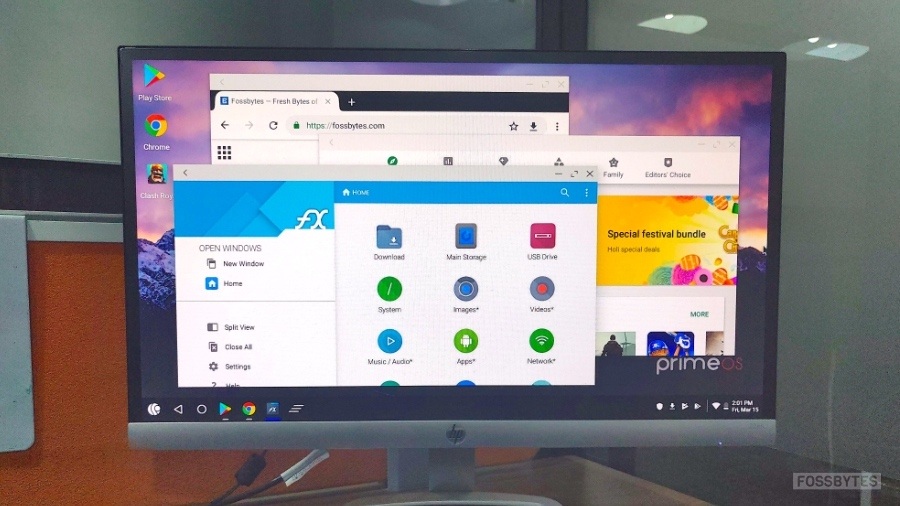
  • Primebook runs on PrimeOS, which is based on Android, not Windows or macOS.
  • MCA utilities like Java, emSigner, and token drivers are only available for Windows and macOS.
  • That means you cannot directly use a Primebook laptop to digitally sign MCA forms.

Workarounds and Alternatives

If you’re using a Primebook, here are your options:

  1. Use a Windows or Mac System
    The most straightforward solution. Install the DSC drivers, Java, and emSigner, and file your forms without issues.
  2. Dual Boot with Windows (if supported)
    Some Primebook models may support dual boot with Windows. If so, you can install Windows alongside PrimeOS and switch when you need MCA filing.
  3. Use Another System Temporarily
    Borrow or rent a Windows/Mac computer just for MCA filing.
  4. Hire a Professional
    Chartered Accountants (CAs) and Company Secretaries (CS) routinely handle MCA compliance. You can provide your DSC and have them file on your behalf.

Conclusion

While the Primebook is great for everyday productivity and learning, it’s not suited for MCA DSC filing because the required utilities don’t support PrimeOS. To stay compliant, you’ll need to switch to a Windows or Mac device for signing and uploading MCA forms.

👉 If you run a company, make sure you arrange access to such a system well in advance of your filing deadlines to avoid last-minute stress.

Here’s an updated version of your blog with a new “Recommended Devices” section. You can plug this in toward the end of your post (just before conclusion).


Recommended Devices for Seamless MCA DSC Filing

To ensure your MCA annual compliance and DSC signing go smoothly, here are a few Dell and Lenovo Windows-based devices that are well suited for this work. These machines support all required software (Java, emSigner, token drivers) and offer the stability and ports needed for digital signatures.

Note: These are suggestions. Always verify compatibility with your DSC token vendor and check driver support for your region.

✅ Dell Options (Laptops & Desktops)

Here are some Dell devices you can consider:

  • Dell Inspiron 5430 — A compact 14″ laptop with Intel Core i5-1335U, SSD, and Windows 11. Good for portability plus power for MCA filing tasks.
  • Dell Inspiron 15 3530 — Slightly larger 15.6″ screen, decent all-rounder for daily use and compliance work.
  • Dell Vostro 3710 — A business-oriented laptop with Windows 11, ideal for small companies or professionals.
  • Dell Vostro 16 5630 — A 16″ variant that gives more screen real estate — useful if you often work with multiple document windows.

Dell also has good business-line models like the Latitude series and OptiPlex desktops. You can check them out on Dell India’s official site. (Dell)


🖥️ Lenovo Options (Desktops / All-in-Ones / Tower PCs)

For those who prefer a desktop or all-in-one setup, Lenovo has solid offerings:

  • Lenovo IdeaCentre Tower (14ᵗʰ Gen) — A tower desktop with full upgradability (RAM, storage) and Windows ready for compliance tasks.
  • Lenovo ThinkCentre Neo 50a AIO — All-in-One form factor (screen + PC in one), reducing cable clutter.
  • Lenovo ThinkCentre M75q Gen 5 — A compact mini desktop (small footprint) that still packs performance.

Lenovo’s ThinkCentre lineup is designed for business use and tends to offer reliable support and long product life. (Lenovo)


🧭 What to Look for When Choosing

When selecting a device for DSC filing and MCA compliance, keep these in mind:

Feature Recommended Spec
Processor (CPU) Modern Intel Core i3/i5 or AMD Ryzen 3/5 or better
RAM Minimum 8 GB (16 GB preferred)
Storage SSD (256 GB or more) for speed and reliability
Operating System Windows 10 or Windows 11 (64-bit)
Ports At least one USB-A port (for DSC token), plus extra ports for peripherals
Support & Drivers The manufacturer should provide driver updates and support for your region
Expansion / Upgradability Easy access to add more RAM, storage, etc.
  • « Go to Previous Page
  • Page 1
  • Interim pages omitted …
  • Page 6
  • Page 7
  • Page 8
  • Page 9
  • Page 10
  • Page 11
  • Go to Next Page »

Primary Sidebar

Recent Posts

  • Understanding the Difference Between a Public GitHub Repository and GitHub Releases
  • Why HubSpot Became Relevant Beyond Email Marketing
  • Where Django Has a Specific Advantage Over WordPress
  • 🛡️ How to Safely Backup Your Code Before Making Changes (Beginner-Friendly Git Guide)
  • WordPress vs Django Admin Panels: How They Handle Backend Management Differently

Archives

  • May 2026
  • April 2026
  • March 2026
  • February 2026
  • January 2026
  • December 2025
  • October 2025
  • September 2025
  • August 2025

Categories

  • Blog

Tag

ai AWS EC2 AWS Lightsail Azure cloud computing Codespace Contabo crm CSS DBMS DigitalOcean Django email marketing forms gaming Git Github hardware hosting HTML Hubspot Markdown PrimeBook Python quantum software spreadsheets SQL Twilio VScode webdev webhosting WordPress
Terms Display
Python Hubspot HTML Twilio VScode software webhosting WordPress webdev quantum Markdown SQL Web Server Github PrimeBook Nginx hardware Git hosting spreadsheets

Start building your digital presence with Webnzee. Contact Us

Webnzee

This website may use AI tools to assist in content creation. All articles are reviewed, edited, and fact-checked by our team before publishing. We may receive compensation for featuring sponsored products and services or when you click on links on this website. This compensation may influence the placement, presentation, and ranking of products. However, we do not cover all companies or every available product.

  • Home
  • Blog
  • Trending
  • Terms
  • Subscribe
  • Contact
Scroll Up