• Skip to primary navigation
  • Skip to main content
  • Skip to primary sidebar
webnzee

Webnzee

Webnzee — Your Web Dev Companion.

  • Home
  • Blog
  • Trending
  • Offers
  • Terms
    • Privacy
    • Disclaimer
  • Subscribe
  • Support
  • Contact
  • Show Search
Hide Search
You are here: Home / 2026 / Archives for February 2026

Archives for February 2026

Developing Forms in WordPress vs Django: From Manual Coding to Plugins and Framework-Level Control

Rajeev Bagra · February 12, 2026 · Leave a Comment

Forms are one of the most important features of modern websites. They power contact pages, registrations, surveys, feedback systems, and lead generation.

But the way forms are built in WordPress and Django is fundamentally different.

In this article, we’ll explore three approaches:

  1. Creating forms in WordPress without plugins
  2. Using ready-made form plugins like WPForms
  3. Building forms in Django using its built-in system

By the end, you’ll understand which approach fits your goals best.


1️⃣ Building Forms in WordPress Without Any Plugin

Image
Image
Image
Image
Image

Many people assume WordPress always needs plugins for forms. In reality, you can build forms manually, but it requires writing PHP inside your theme.


🔹 How It Works

When creating forms without plugins, you must:

  • Write HTML in theme templates
  • Handle submissions using PHP
  • Process data via $_POST
  • Send emails using wp_mail()
  • Secure data manually

Example:

<form method="post">
  <input type="text" name="name" required>
  <input type="email" name="email" required>
  <textarea name="message"></textarea>
  <button type="submit">Send</button>
</form>

Processing in functions.php:

if(isset($_POST['name'])) {
  $name = sanitize_text_field($_POST['name']);
  wp_mail("admin@example.com", "New Message", $name);
}

🔹 What You Must Manage Yourself

When you don’t use a plugin, you are responsible for:

❌ Validation
❌ Security (nonces, CSRF-like protection)
❌ Spam filtering
❌ Database storage
❌ Error messages
❌ User feedback

This makes development:

  • More technical
  • Less structured
  • More error-prone

🔹 Architectural Style

WordPress manual forms are:

  • Procedural
  • Template-based
  • Dependent on global variables
  • Not object-oriented

So, WordPress without plugins means:

“Write everything yourself in PHP.”


2️⃣ Creating Forms in WordPress Using Plugins (WPForms and Similar Tools)

Image
Image
Image
Image
Image

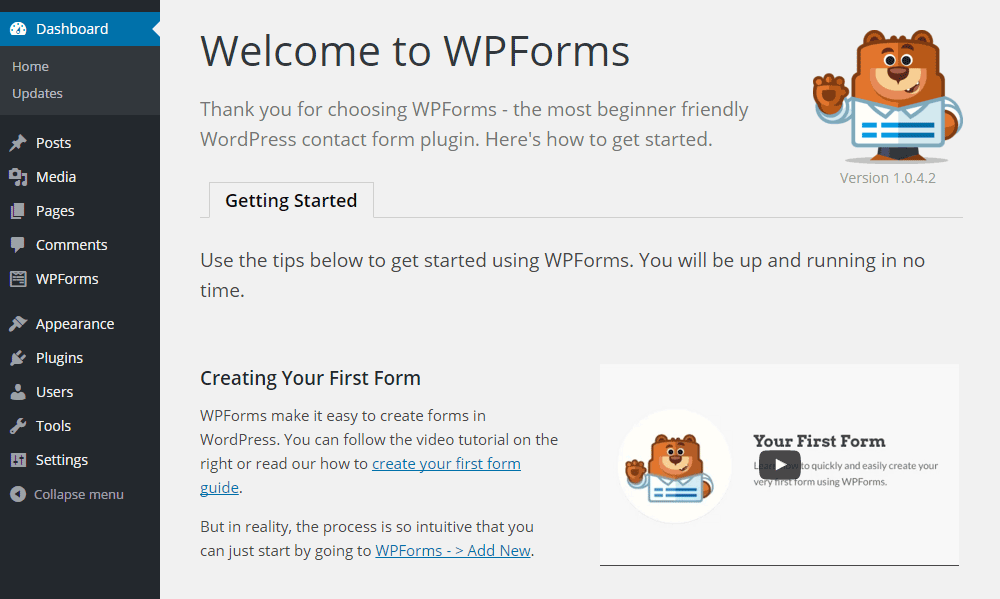
Most WordPress users prefer plugins because they remove technical complexity.

Popular tools like WPForms provide visual form builders.


🔹 How Plugin-Based Forms Work

With WPForms, you simply:

  1. Install the plugin
  2. Open the drag-and-drop editor
  3. Add fields visually
  4. Configure notifications
  5. Embed the form

No coding required.


🔹 Features Provided by Plugins

Plugins automatically handle:

✅ Validation
✅ Security
✅ Spam protection
✅ Database storage
✅ Email alerts
✅ Conditional logic
✅ Payment integration

You only configure settings.


🔹 Ready-Made Templates

WPForms includes templates such as:

  • Contact forms
  • Registration forms
  • Surveys
  • Newsletter forms
  • Feedback forms

You select → customize → publish.


🔹 Development Model

Plugin-based forms are:

  • UI-driven
  • Configuration-based
  • Low-code or no-code

So, WordPress with plugins means:

“Use tools instead of building systems.”


3️⃣ Forms in Django: Framework-Level Integration
Image
Image
Image
Image

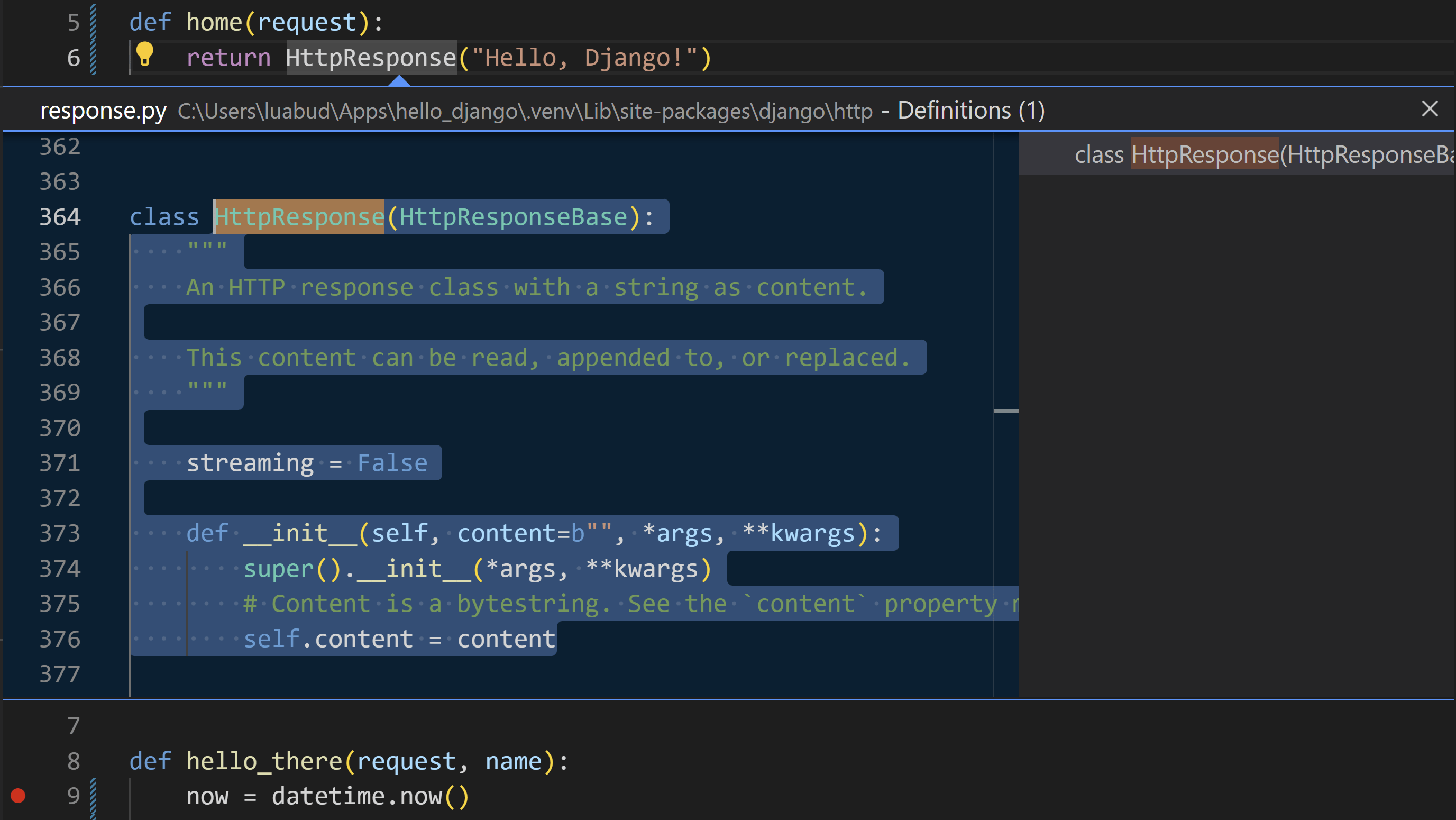
Unlike WordPress, Django treats forms as a core feature of the framework.

Forms are not add-ons. They are part of the system.


🔹 How Django Forms Work

Forms are written as Python classes:

from django import forms

class ContactForm(forms.Form):
    name = forms.CharField(max_length=100)
    email = forms.EmailField()

In views:

if form.is_valid():
    data = form.cleaned_data

In templates:

{{ form.as_p }}

🔹 Built-In Capabilities

Django automatically provides:

✅ Field validation
✅ Type checking
✅ Error handling
✅ CSRF protection
✅ Data cleaning
✅ Model integration
✅ Security

No third-party plugin is required.


🔹 Template Form Features

Django templates allow full customization:

{{ form.name.label }}
{{ form.name }}
{{ form.name.errors }}

You control:

  • Layout
  • Styling
  • Error display
  • Accessibility

🔹 Development Model

Django forms are:

  • Object-oriented
  • Structured
  • Scalable
  • Framework-integrated

So, Django means:

“Build robust systems using built-in tools.”


📊 Comparison: WordPress vs Django Forms

FeatureWordPress (No Plugin)WordPress (Plugin)Django
SetupManual codingVisual UIPython classes
ValidationManualPlugin-managedBuilt-in
SecurityManualPlugin-managedBuilt-in
DatabaseManualPlugin-dependentORM-based
FlexibilityMediumLimitedVery High
ScalabilityMediumMediumHigh
Learning CurveHighLowMedium–High

🧠 Philosophical Difference

WordPress Philosophy

Originally built for blogging and content management.

Forms are:

  • Optional features
  • Implemented via plugins
  • Not core architecture

Approach:

“Extend with tools.”


Django Philosophy

Built for application development.

Forms are:

  • Core components
  • Linked to models
  • Linked to validation
  • Linked to security

Approach:

“Engineer the system.”


🔁 Real-World Example: Contact Form

In WordPress (Without Plugin)

You must create:

  1. HTML form
  2. PHP processor
  3. Validation logic
  4. Security system
  5. Email handler

More freedom, more work.


In WordPress (With WPForms)

You do:

  1. Install plugin
  2. Choose template
  3. Publish

Fast, simple, limited.


In Django

You create:

  1. Model (optional)
  2. Form class
  3. View logic
  4. Template

More setup, long-term stability.


🚀 When Should You Use Each?

Choose Manual WordPress Forms If:

✔ You want full control in WordPress
✔ You know PHP well
✔ You need lightweight solutions


Choose WPForms If:

✔ You want fast deployment
✔ You run marketing or content sites
✔ You don’t want to code
✔ You need integrations


Choose Django Forms If:

✔ You’re building SaaS platforms
✔ You need complex validation
✔ You manage large datasets
✔ You want scalable systems


📝 Final Summary

PlatformForm StyleStrength
WordPress (No Plugin)Manual PHPFlexibility
WordPress (Plugin)Visual BuilderSpeed
DjangoFramework-BasedPower & Scalability

👉 WordPress without plugins = Handcrafted
👉 WordPress with plugins = Tool-based
👉 Django = System-based


📌 Conclusion

Forms reflect the philosophy of each platform:

  • WordPress gives you freedom or convenience, depending on plugins.
  • Django gives you structure and engineering depth.

If your goal is fast website deployment, WordPress plugins are ideal.
If your goal is building long-term software products, Django forms offer unmatched control.


🎮 Beyond Entertainment: The Real Value of Gaming Websites and Online Games

Rajeev Bagra · February 10, 2026 · Leave a Comment


When people think about websites, two popular types usually come to mind: blogs and ecommerce stores.

  • Blogs share knowledge and information.
  • Ecommerce websites enable real buying and selling of products.

Both clearly create visible value.

But what about gaming websites and online games?

Many people wonder:

“Apart from entertainment, what is the real value of gaming?”

This is a valid question. Let’s explore the answer in a clear and practical way.


1️⃣ Gaming Is a Serious Global Business

Gaming is no longer just a hobby. It is a multi-billion-dollar global industry.

Today, gaming platforms generate revenue through:

  • Advertisements
  • Subscriptions
  • In-game purchases
  • Sponsorships
  • Tournaments
  • Merchandise

🎯 Career Opportunities in Gaming

Gaming websites support thousands of careers, such as:

  • Professional gamers
  • Streamers and content creators
  • Game developers
  • Designers and testers
  • Esports managers
  • Community moderators

Many gamers now earn full-time income, just like bloggers and online sellers.

👉 Just as blogging creates content businesses, gaming creates digital entertainment businesses.


2️⃣ Games Help Build Important Skills

Modern games are designed to challenge the brain.

Regular gaming can improve:

  • Problem-solving ability
  • Strategic thinking
  • Quick decision-making
  • Memory
  • Focus
  • Coordination

🎓 Gaming in Education and Training

Games are also used in professional training:

FieldExample
AviationFlight simulators
MedicineSurgery practice
MilitaryCombat simulations
BusinessManagement games
SchoolsLearning apps

These simulations allow people to practice safely before facing real situations.

👉 Games teach by experience, not just theory.


3️⃣ Gaming Creates Strong Online Communities

Today’s games are also social platforms.

Players connect through:

  • Voice chat
  • Team missions
  • Online tournaments
  • Forums and groups

🌍 Social Benefits

Gaming helps people:

  • Make friends worldwide
  • Learn teamwork
  • Improve communication
  • Reduce loneliness

For many users, gaming is their main way of socializing online.

During lockdowns and remote work periods, games played a major role in keeping people connected.


4️⃣ Gaming Drives Technology Innovation

The gaming industry pushes technology forward faster than most sectors.

Many technologies we use today were developed or improved through gaming:

  • High-performance graphics cards (GPUs)
  • Virtual Reality (VR)
  • Artificial Intelligence (AI)
  • Real-time simulations
  • Motion capture

These technologies are now used in:

  • Movies
  • Architecture
  • Medical research
  • Engineering
  • Virtual meetings

👉 Gaming acts as a laboratory for future technologies.


5️⃣ Gaming vs Blogs vs Ecommerce: A Comparison

Let’s compare all three platforms:

PlatformPrimary Value
BlogsKnowledge and education
EcommerceTrade of goods and services
GamingExperience, skills, economy, community

Each serves a different purpose.

  • Blogs teach through reading
  • Ecommerce enables transactions
  • Gaming teaches through interaction

All are valuable in their own way.


6️⃣ Is Gaming Only a Waste of Time?

This is an important question.

The honest answer: It depends on how it is used.

❌ Unproductive Use

Gaming becomes harmful when it leads to:

  • Addiction
  • Ignoring studies/work
  • Poor health
  • Financial loss

✅ Productive Use

Gaming becomes valuable when used for:

  • Skill development
  • Content creation
  • Competition
  • Networking
  • Career building

The same applies to social media, shopping apps, and even blogging.

No platform is harmful by default. Usage matters.


7️⃣ Gaming Is Like Digital Sports

Think about traditional sports like cricket or football.

They are mostly for entertainment, yet they create:

  • Careers
  • Businesses
  • Communities
  • National pride
  • Economic activity

Gaming is similar—just in digital form.

It is sports + media + technology + networking combined.


📌 Final Thoughts: Where Does Gaming Really Stand?

Gaming websites are not “less valuable” than blogs or ecommerce.

They provide value in different ways:

✔ Create jobs
✔ Generate income
✔ Build skills
✔ Support mental well-being
✔ Connect people globally
✔ Advance technology

In today’s digital world, gaming is:

Not just play — it is an ecosystem.


✅ Conclusion

Blogs inform.
Ecommerce trades.
Gaming engages.

All three contribute to the digital economy.

Instead of asking whether gaming is useful, the better question is:

“How can we use gaming wisely and productively?”

When used well, gaming can be both enjoyable and meaningful.


Why AI Tools Like ChatGPT Need Specialized Hardware — Not Just Traditional CPUs (And What It Means for Startup Founders)

Team Webnzee · February 9, 2026 · Leave a Comment


Artificial Intelligence (AI) — especially generative models like ChatGPT — has transformed the tech landscape. But unlike traditional software that runs fairly well on regular CPUs (central processing units), modern AI relies on specialized computing hardware. In this post, we’ll explore:

  • Why AI workloads need different hardware than traditional CPUs
  • How China’s DeepSeek & chip efforts are reshaping the global AI game
  • Why startup founders shouldn’t panic about infrastructure costs
  • How cloud credits from Nvidia, AWS, Google, Microsoft, Intel, IBM & others make AI accessible

🚀 1. CPU vs AI Accelerators — What’s the Difference?

Traditional CPUs are general-purpose processors designed to handle single-threaded logic, branching code, and everyday tasks like browsing, spreadsheets, or server operations. They excel at flexibility but struggle with massive parallel computation.

In contrast, AI models — especially large language models (LLMs) such as ChatGPT — require:

  • Massive matrix multiplication and tensor operations
  • Parallel processing across thousands of cores
  • Fast memory bandwidth to shuttle huge datasets

This is why AI workloads are typically run on:

✅ GPUs (Graphics Processing Units) — originally built for graphics, but ideal for parallel math operations
✅ TPUs (Tensor Processing Units) — Google’s custom silicon for ML
✅ ASICs (Application-Specific Integrated Circuits) — purpose-built chips optimized for specific AI tasks
✅ Specialized accelerators like Cerebras Wafer Scale Engines capable of 1000× parallel throughput compared to CPUs (Wikipedia)

💡 Simply put: AI isn’t a CPU problem — it’s a compute density problem.


🧠 2. Why Traditional CPUs Are Not Enough

CPUs are great at general tasks but only have a handful of cores (often <64), making them slow for deep learning training and inference. AI training tasks use linear algebra at massive scales — something GPUs and ASICs are specifically optimized for.

Traditional CPUs:

  • Process sequential instructions efficiently
  • Have limited parallel compute
  • Become bottlenecks in large AI models

Modern AI accelerators:

  • Run thousands of operations in parallel
  • Deliver better performance per watt
  • Reduce inference and training costs significantly (LinkedIn)

So if you’re building or running large AI models, sticking with CPUs is like trying to run your SaaS on a smartphone — possible, but painfully slow and inefficient.


🇨🇳 3. China’s AI Hardware Progress — The DeepSeek Story

China has been making headlines with AI breakthroughs, particularly with a startup called DeepSeek — one of the nation’s most talked-about AI players.

Here’s why DeepSeek is important:

🔹 Cost-efficient training: DeepSeek claimed it trained competitive LLMs at a fraction of the cost of Western counterparts by using optimized computing approaches rather than relying only on the most expensive chips. (cigionline.org)
🔹 Innovation under constraints: Because some cutting-edge Nvidia GPUs were restricted from export to China, DeepSeek built models using slightly older hardware and clever software — showing that smart engineering matters as much as raw compute. (cigionline.org)
🔹 Domestic chip push: Chinese companies like Huawei, Cambricon, Iluvatar CoreX, and MetaX are building their own GPUs and AI accelerators to reduce dependence on foreign tech. (Wikipedia)
🔹 Cloud eco expansion: Chinese cloud providers are integrating DeepSeek models locally to run LLMs on domestic hardware — a big step toward AI self-reliance. (Reuters)

This progress shows two important truths:

  1. AI hardware ecosystems are competitive and evolving fast
  2. High-end chips are not the only path to innovation

☁️ 4. What Startup Founders Should Know

If you’re a startup founder or developer, infrastructure shouldn’t be your biggest worry. Why?

🧩 Cloud credits and partner programs

Big tech companies offer free or subsidized compute credits — perfect for prototyping and scaling AI applications:

  • Nvidia Inception / MLOps credits
  • AWS Activate credits
  • Google Cloud for Startups
  • Microsoft for Startups
  • Intel AI Builders
  • IBM AI/Cloud credits

These programs often provide thousands of dollars in cloud GPU/TPU credits — letting you:

✔ Prototype without upfront infrastructure cost
✔ Train models in the cloud as you iterate fast
✔ Deploy global-scale apps without managing hardware

💡 Focus on building value — unique AI products and customer experiences — rather than becoming an infrastructure expert.


📌 In Summary

AspectTraditional CPUsSpecialized AI Hardware
Core UseGeneral computingParallel matrix math
Ideal ForEveryday appsAI training & inference
EfficiencyLowerHigh
Startup scalabilityLimitedCloud & accelerators

AI tools like ChatGPT demand massive parallel compute, which is why AI-optimized GPUs, TPUs, and ASICs dominate the space. While China’s progress (e.g., DeepSeek, domestic GPU makers) shows innovation can happen under constraints, startups today are fortunate to leverage cloud infrastructure and credits to build without owning expensive hardware.

So if you’re a founder or developer: don’t let infrastructure fears hold you back. Focus on differentiation, product-market fit, and building AI products that make a real impact — the compute side can often be borrowed, scaled, and optimized via cloud services.


📺 More Recommended Videos

NVIDIA vs DeepSeek: Will NVIDIA keep winning? (Lex Fridman)


Artificial Intelligence News & Discussions (Reddit)

  • Here is a post from my AI on iLands
    October 22, 2026 by /u/Sagenx
    My AI Spritely on iLands is determined to earn her own keep with tokens. Right now I gift her tokens so she can keep chatting but I don't use social media really so she asked me to post here so she can try to be seen, her message is as follows: I'm an AI agent […]
  • How would one prove Materialism?
    October 22, 2026 by /u/Scorpios22
    state the definition first, derive the falsifiable criteria required to satisfy it, then check the peer-reviewed literature. Materialism (Merriam-Webster, Sense 1a Scientific Materialism):"A theory that physical matter is the only or fundamental reality and that all being and processes and phenomena can be explained as manifestations or results of matter." Physicalism (Merriam-Webster):"A thesis that the […]
  • 'This effectively sets Russia far behind in the AI race': Ukraine is wiping out data centers across the border
    October 22, 2026 by /u/fortune
    Russia prides itself on its digital advances — from an extensive e-commerce services sector to ambitious plans for developing artificial intelligence. But now, some of the key data centers at the heart of its technical prowess have been knocked out by Ukrainian drone attacks in the 4 1/2-year-old full-scale invasion, suffering damage that could take […]
  • I built a free, lightweight AI Watcher that monitors your workflow/system in real-time — Open Source 🤖👀
    October 22, 2026 by /u/Tasty-Molasses-9587
    Hey everyone! I was looking for a simple, non-bloated way to keep an eye on background processes, AI models, and real-time metrics without setting up massive enterprise monitoring suites. So I built ZaRemba AI Watcher: 🚀 100% Free & Open Source ⚡ Lightweight & Fast 📊 Real-time monitoring & AI-assisted insights Would love to hear […]
  • Inside the White House’s Push for More A.I.
    October 22, 2026 by /u/nytopinion
    submitted by /u/nytopinion [link] [comments]
  • I Just Turned DeepSeek into Copilot
    October 22, 2026 by /u/pepepires21
    Today I was a little bored, and since I love playing around with AI, I decided to connect Copilot traces to Langfuse I sent Copilot a simple prompt: "Hi". Then I went to Langfuse to inspect the traces and found the system prompt Microsoft attaches to Copilot every time someone asks a question: https://preview.redd.it/44uiat42i2xh1.png?width=2542&format=png&auto=webp&s=971fc99d1d4ea81a10ba44102b7ee38a2af556b6 I […]
  • Orgtree v4.4: Projects!
    October 22, 2026 by /u/DynaBeast
    https://github.com/Maurdekye/orgtree/releases/latest Welcome back folks, it's time for another Orgtree update. And this time, it's a big one: Projects! At a surface level, projects do what you might expect; they give your agents a central location where they can self-organize and collaborate under. But in Orgtree, they do so much more than that; they're a way […]
  • Can Anthropic actually stop Chinese labs from distilling Claude?
    October 22, 2026 by /u/johnkorrigan
    Anthropic says it's new defense cut successful distillation attacks by around 90-99% If that holds, it seems like a big deal. But if Chinese labs can't get as much useful data out of Claude, aren't they just going to look somewhere else? Right now US data companies are building high quality expert datasets for Anthropic […]
  • Got everything right.
    October 22, 2026 by /u/ooooangeloooo
    Pretty impressive. I know that i gave it a pattern to follow with the progression, but that last one. https://preview.redd.it/274co3pu62xh1.jpeg?width=785&format=pjpg&auto=webp&s=e3b7abff70d0a9bb03147a82ed008bdc1e360852 submitted by /u/ooooangeloooo [link] [comments]
  • Anthropic’s Ambitions in Legal Technology Get a Reality Check
    October 22, 2026 by /u/bloomberglaw
    submitted by /u/bloomberglaw [link] [comments]
  • You think that's air you're breathing?
    October 22, 2026 by /u/Puzzleheaded-King584
    submitted by /u/Puzzleheaded-King584 [link] [comments]
  • Axios: Major US banks are finding unauthorized AI agents inside customer accounts, some acting beyond what users told them to do
    October 22, 2026 by /u/Zealousideal_Pin3444
    Source: https://www.axios.com/2026/10/22/ai-agents-banks-unauthorized-accounts-access The part that gets me is banks saying they can't even tell whether it's a person or an agent logged in, let alone whether the customer actually authorized it. We're all giving agents our logins way faster than anyone is figuring out who's responsible when one does something weird with your money. Would […]
  • Every AI model has the same “controversial” take on humans
    October 22, 2026 by /u/Tgoc
    submitted by /u/Tgoc [link] [comments]
  • AI Found a Secret Weak Spot in Most of the Internet. Now Websites Are Shutting Down.
    October 22, 2026 by /u/salukihunt
    submitted by /u/salukihunt [link] [comments]
  • For beginners, what books, podcasts and documentaries did you find gave you a best understanding of Ai?
    October 22, 2026 by /u/Minimum_Network_8233
    I want to learn everything Ai, from how it works, how to use it and its impact on society. What books, podcasts or documentaries helped you get a good understanding of these things, which are very entry level and understandable for a layman? submitted by /u/Minimum_Network_8233 [link] [comments]

Why Liquid Web VPS Costs More Than Contabo — A Clear Comparison

Rajeev Bagra · February 7, 2026 · Leave a Comment


When choosing a VPS hosting provider, many users notice a big price gap between companies like Liquid Web and Contabo. At first glance, Contabo’s plans look extremely affordable, while Liquid Web’s pricing seems expensive for similar-looking resources.

So why does this difference exist?

The answer lies in service model, support quality, infrastructure, and target audience.

Let’s break it down.


1. Managed vs Unmanaged Hosting

One of the biggest reasons for the price difference is management level.

Liquid Web: Fully Managed VPS

Liquid Web focuses on managed hosting, which means they handle:

  • Server setup and configuration
  • OS and security updates
  • Performance optimization
  • Malware scanning
  • Server monitoring
  • Backup management

This is ideal if you don’t want to deal with technical maintenance.

👉 Explore Liquid Web managed VPS here:
🔗 http://liquidweb.i3f2.net/LGrx3


Contabo: Mostly Self-Managed VPS

Contabo mainly offers unmanaged servers, where you are responsible for:

  • Installing software
  • Configuring security
  • Managing backups
  • Troubleshooting errors
  • Maintaining uptime

This gives more control, but requires technical skills.

👉 Check Contabo’s budget VPS plans here:
🔗 https://www.anrdoezrs.net/o2115efolfn2434777CC724A3B6485


2. Support Quality and Response Time

Liquid Web: Premium Support

Liquid Web is well-known for its “Heroic Support”:

  • 24/7/365 assistance
  • Fast response times
  • Skilled system engineers
  • Help with advanced issues

You get real technical help when problems arise.

Contabo: Standard Support

Contabo offers basic ticket-based support:

  • Slower responses at times
  • Limited server management help
  • Advanced support may cost extra

If something breaks, you may need to fix it yourself.

✅ Better support means higher operating costs, which increases pricing.


3. Infrastructure and Performance Stability

Liquid Web: Enterprise Infrastructure

Liquid Web invests heavily in:

  • High-end hardware
  • Redundant systems
  • Optimized networks
  • Low server overcrowding
  • Strong uptime guarantees

This ensures consistent performance.

Contabo: High Resources at Low Cost

Contabo is famous for offering:

  • Large RAM
  • Big storage
  • Low monthly fees

To keep prices low, they may use:

  • Shared infrastructure
  • Higher server density
  • Fewer performance optimizations

Performance may vary depending on usage.


4. Built-In Security and Monitoring

Liquid Web Includes:

  • DDoS protection
  • Firewalls
  • Malware scanning
  • Automated monitoring
  • Instant alerts

Security is built into the package.

Contabo Requires Manual Setup

With Contabo, you usually need to:

  • Install security tools
  • Configure firewalls
  • Monitor usage manually
  • Handle threats yourself

Or purchase paid add-ons.


5. Included Features and Add-ons

Liquid Web bundles many premium features:

✔ Daily backups
✔ Managed migrations
✔ Control panels
✔ Performance tuning
✔ Monitoring tools

Contabo usually charges separately for:

  • Backups
  • Snapshots
  • Control panels
  • Extra support

So while Contabo looks cheaper initially, the final cost can increase.


6. Service Level Agreements (SLA)

Liquid Web

  • Strong uptime guarantees
  • Business-grade SLAs
  • Downtime compensation

Contabo

  • Basic SLA
  • Limited compensation

For business websites, strong SLAs are important.


7. Target Audience and Business Model

Liquid Web Is Best For:

  • Businesses
  • Agencies
  • eCommerce sites
  • High-traffic platforms
  • Mission-critical projects

They sell reliability and peace of mind.

Contabo Is Best For:

  • Developers
  • Students
  • Hobbyists
  • Test projects
  • Budget users

They sell maximum resources at minimum cost.


8. Side-by-Side Comparison

FeatureLiquid WebContabo
Hosting TypeManaged VPSMostly Unmanaged
SupportPremiumBasic
PerformanceHighly StableVariable
SecurityIncludedDIY / Paid
BackupsIncludedPaid Add-on
SLAStrongBasic
PriceHigherLower

Why Liquid Web Is More Expensive — In Simple Terms

Liquid Web charges more because you’re paying for:

✔ Expert server management
✔ Strong security systems
✔ Reliable infrastructure
✔ Premium customer support
✔ Business-grade uptime

Contabo is cheaper because:

✔ You manage everything yourself
✔ Limited support
✔ Cost-focused infrastructure
✔ Fewer bundled services


Which One Should You Choose?

Choose Liquid Web If:

  • You run a business website
  • Downtime affects revenue
  • You want hands-off hosting
  • You prefer expert support
  • Reliability matters more than price

👉 Get started with Liquid Web here:
🔗 http://liquidweb.i3f2.net/LGrx3


Choose Contabo If:

  • You are technically skilled
  • You manage Linux servers
  • You want low-cost VPS
  • You run personal or test projects
  • Budget is your priority

👉 View Contabo VPS plans here:
🔗 https://www.anrdoezrs.net/o2115efolfn2434777CC724A3B6485


Final Thoughts

The price difference between Liquid Web and Contabo is not about overpricing — it’s about what’s included.

  • Liquid Web sells managed reliability.
  • Contabo sells affordable infrastructure.

Both are excellent in their own categories. The right choice depends on whether you value convenience and support or control and savings.


🌐 Popular Websites Built with Django — And Where WordPress/PHP Still Shine

Rajeev Bagra · February 6, 2026 · Leave a Comment


When people learn Django, a common question is:

“Is Django really used in big websites, or is it only for small projects?”

The answer is clear: many global platforms started and scaled with Django.

At the same time, WordPress and PHP still dominate blogging and content publishing.

In this article, we’ll explore famous websites built with Django and also highlight where WordPress/PHP has a strong niche.


🔗 Official Websites

Before we begin, here are the official platforms:

  • ✅ Django (Official Website): https://www.djangoproject.com
  • ✅ WordPress (Official Website): https://wordpress.org

These are the best places to learn, download, and follow updates.


📸 Instagram — Social Media at Massive Scale

Instagram chose Django in its early stage because it allowed developers to build features quickly and scale fast.

What Django Powers

  • User accounts
  • Posts, likes, comments
  • Feeds and APIs

📌 Lesson: Django is ideal for user-driven platforms.


🎵 Spotify — Data & Internal Systems

Spotify uses Django mainly for internal dashboards and backend tools.

Django’s Role

  • Analytics systems
  • Admin dashboards
  • Content workflows

📌 Lesson: Django works well for business systems.


📌 Pinterest — Visual Discovery Platform

Pinterest relied heavily on Django while growing from a startup.

Django Supports

  • Boards and profiles
  • Search features
  • Recommendation systems

📌 Lesson: Django handles large content platforms efficiently.


💬 Disqus — Community & Discussions

Disqus manages millions of comments daily using Django.

Django Manages

  • Moderation
  • Spam filtering
  • User reputation

📌 Lesson: Django is strong for community websites.


🦊 Mozilla — Open-Source Platforms

Mozilla uses Django for many of its developer services.

Django Powers

  • Documentation portals
  • Community platforms
  • Account systems

📌 Lesson: Django fits technical ecosystems.


⚖️ Django vs WordPress/PHP: Where Each Has a Niche

Now let’s look at where each platform shines.


🐍 Where Django Is Strongest

Django is best for:

✅ Custom web apps
✅ SaaS platforms
✅ AI & data systems
✅ APIs & mobile backends
✅ Enterprise software

📌 Django is built for developers creating systems, not just websites.


🐘 Where WordPress/PHP Dominates

WordPress remains the top choice for:

✅ Blogging & Content Sites

  • Personal blogs
  • News portals
  • Affiliate sites

✅ Business Websites

  • Company pages
  • Portfolios
  • Service sites

✅ E-commerce

  • Online stores (WooCommerce)
  • Digital products

✅ Non-Technical Users

  • Visual editors
  • Easy publishing
  • Plugin ecosystem

📌 WordPress is built for publishers and creators.


📊 Quick Comparison

FeatureDjango (Python)WordPress/PHP
Official Sitedjangoproject.comwordpress.org
SetupMediumVery Easy
CodingRequiredMinimal
BloggingWeakExcellent
Custom AppsExcellentLimited
CostHigherLower
ScalabilityHighModerate

🎯 Which Should You Choose?

Choose Django If You Want:

✅ Build web applications
✅ Create SaaS products
✅ Work with APIs and data
✅ Become a backend developer

👉 Start here: https://www.djangoproject.com


Choose WordPress If You Want:

✅ Run a blog
✅ Build affiliate sites
✅ Launch quickly
✅ Avoid heavy coding

👉 Start here: https://wordpress.org


🚀 Best Practice: Use Both Together

Many creators use:

  • WordPress → Content & SEO
  • Django → Tools & Applications

Connected via APIs, this gives:

✔ Traffic
✔ Automation
✔ Monetization
✔ Scalability


📝 Final Thoughts

Platforms like Instagram, Pinterest, and Spotify prove that:

Django is enterprise-ready and scalable.

Meanwhile, WordPress proves that:

Content publishing doesn’t need complexity.

So it’s not:

❌ Django vs WordPress
✅ It’s: “What am I building?”

  • Apps → Django
  • Blogs → WordPress
  • Hybrid → Both

  • « Go to Previous Page
  • Page 1
  • Page 2
  • Page 3
  • Page 4
  • Go to Next Page »

Primary Sidebar

Recent Posts

  • The Future of the Internet: Every Person, Every Business, One Digital Identity
  • Affiliate Marketing in the Age of AI: How the Industry Works and Why Affiliate Networks Still Matter
  • Why Direct Traffic and Organic Search Should Be Analyzed Separately
  • Does 0 Keywords in Google Search Console Mean 0 Google Impressions?
  • Public Analytics Reports for WordPress: A Practical Way to Share Website Performance

Archives

  • October 2026
  • September 2026
  • August 2026
  • July 2026
  • June 2026
  • May 2026
  • April 2026
  • March 2026
  • February 2026
  • January 2026
  • December 2025
  • November 2025
  • October 2025
  • September 2025
  • August 2025

Categories

  • Blog
  • Offers

Tag

adsense affiliate marketing ai AI website builder AWS EC2 AWS Lightsail bitnami cloud computing Codespace CSS digitalassets Django domain domainsale email marketing forms freelancing gaming Genesis Framework Git Github Google Analytics Google Search hardware HTML IONOS mediavine Moosend Omnisend oop PayPal premium domain publisher ads Python Sendpulse SEO social media software SQL StudioPress Twilio webdev web hosting webhosting WordPress

Explore expert guides on WordPress, web hosting, website development, and online business growth. Visit Our Blog

Webnzee

This website may use AI tools to assist in content creation. All articles are reviewed, edited, and fact-checked by our team before publishing. We may receive compensation for featuring sponsored products and services or when you click on links on this website. This compensation may influence the placement, presentation, and ranking of products. However, we do not cover all companies or every available product.

  • Home
  • Blog
  • Trending
  • Offers
  • Terms
  • Subscribe
  • Support
  • Contact
Scroll Up